
[Interview Report]
Kunitachi College of Music and College sign an agreement on collaboration and cooperation
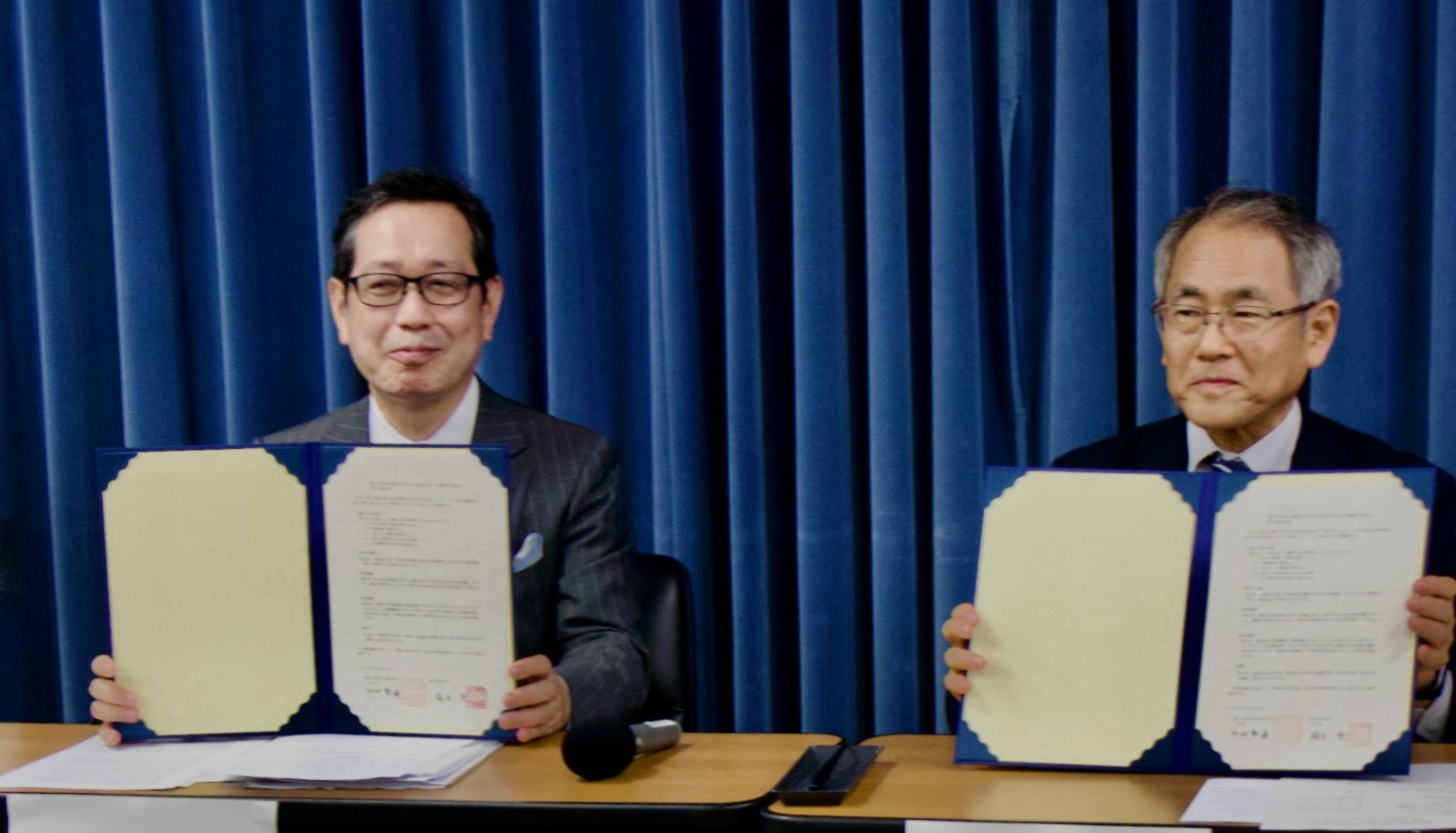
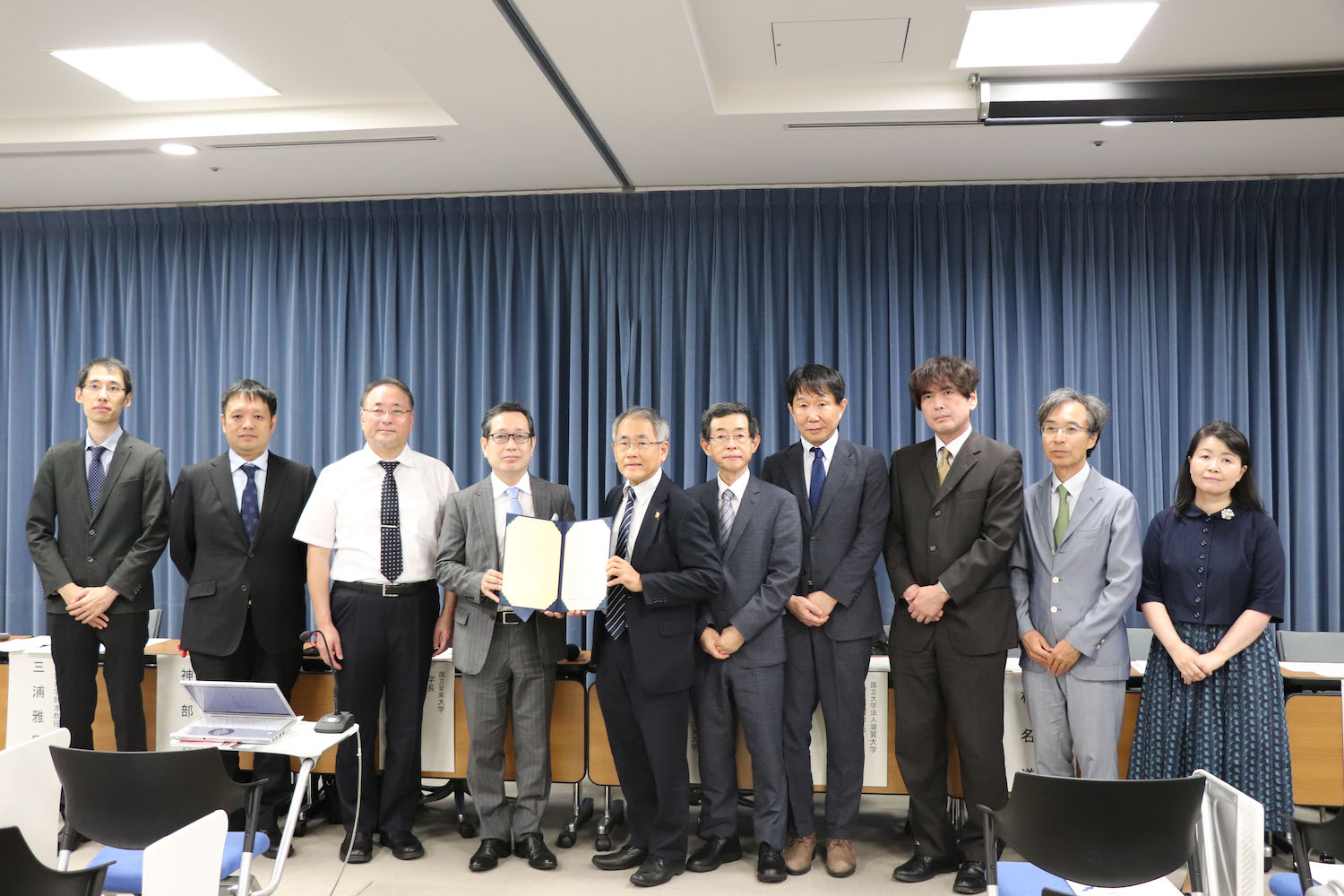
On July 28, 2023, our college and College signed an agreement on collaboration and cooperation and held a joint press conference.
The purpose of this agreement is to promote exchanges that take advantage of the strengths of both schools in a wide range of areas, including student education, research, and academic studies.
At the press conference, many questions were asked about the significance of this agreement and the future educational and research activities of both schools, indicating the high level of interest.
Data science and art are unique fields
First, President Minoru Umemoto spoke about the significance of this agreement, saying, "We aim to create a new musical culture by bringing together the two different fields of music and data science."
Next, College President Akimichi Takemura said he was intrigued by the agreement after seeing the news that our college would be opening Music Data Science Course He mentioned that he himself had received specialized training aspiring to become a pianist, and spoke of his outlook for future exchanges, saying, "Advances in AI technology are bringing the boundaries between data science and music closer, and I believe we may be able to do new things. I believe the field of data science x art is a unique endeavor in terms of how much we can approach human sensibilities, and how human creativity and data science will interact amid the recent rise of generative AI."
Taking on the challenge of learning new fields not found in the traditional curriculum
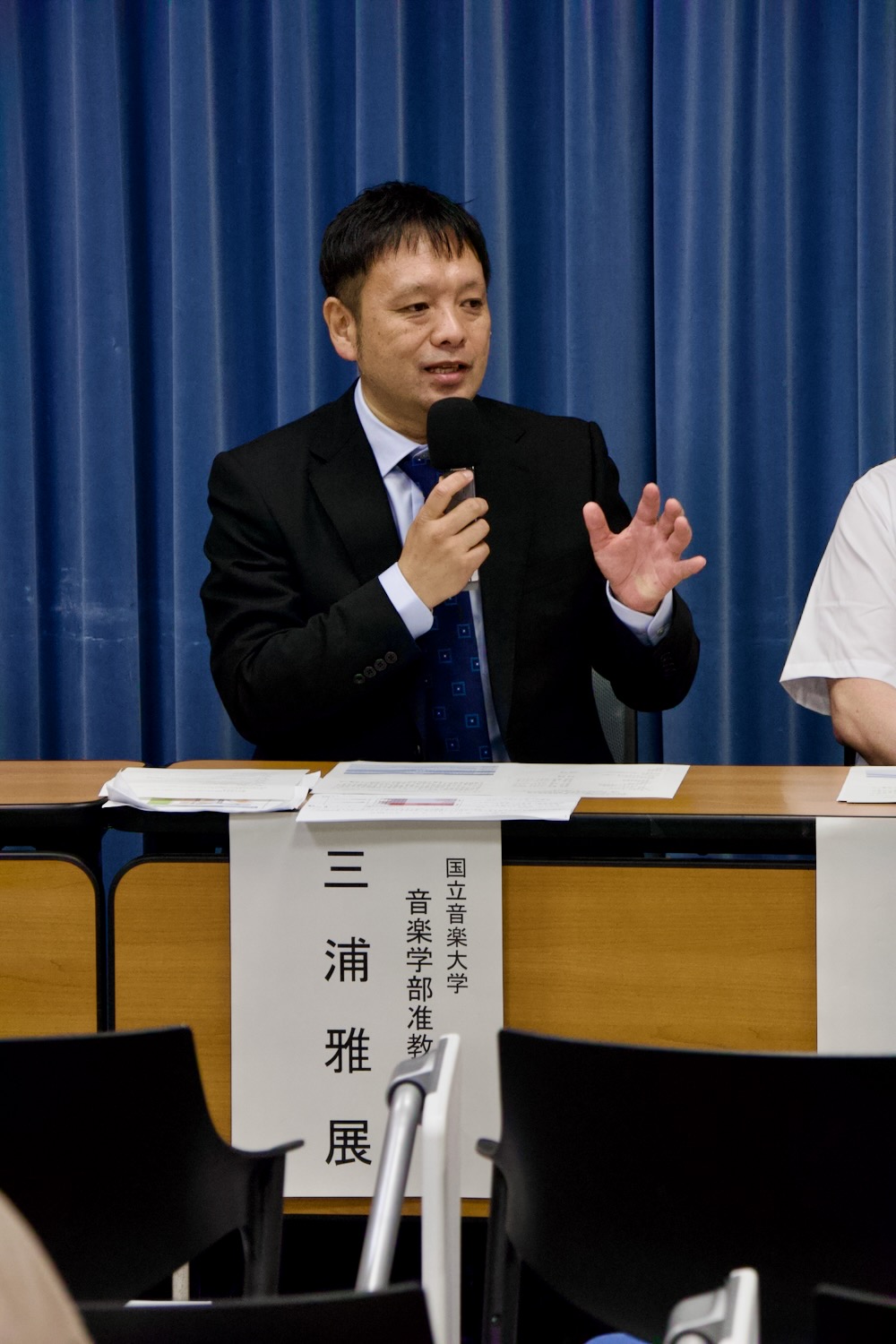
Following the signing of the agreement, both schools introduced their respective initiatives in the field of data science.
From our college, Associate Professor Masanobu Miura Musicology and Music Informatics Department of Music Cultures & Education and is in charge of Music Data Science Course spoke about the curriculum for Music Data Science Course.
He explained that while our college has been engaged in education and research centered on music, in order to further spread music to society, it is necessary to think about music from a data science perspective. For example, he said that the university aims to cultivate music data scientists who can use the comprehensive knowledge and sensibilities of music that music students have acquired in Music Data Science Course to model the functions of recommendation systems used in music distribution, and give back to society at large the knowledge they have acquired in the music data science course.
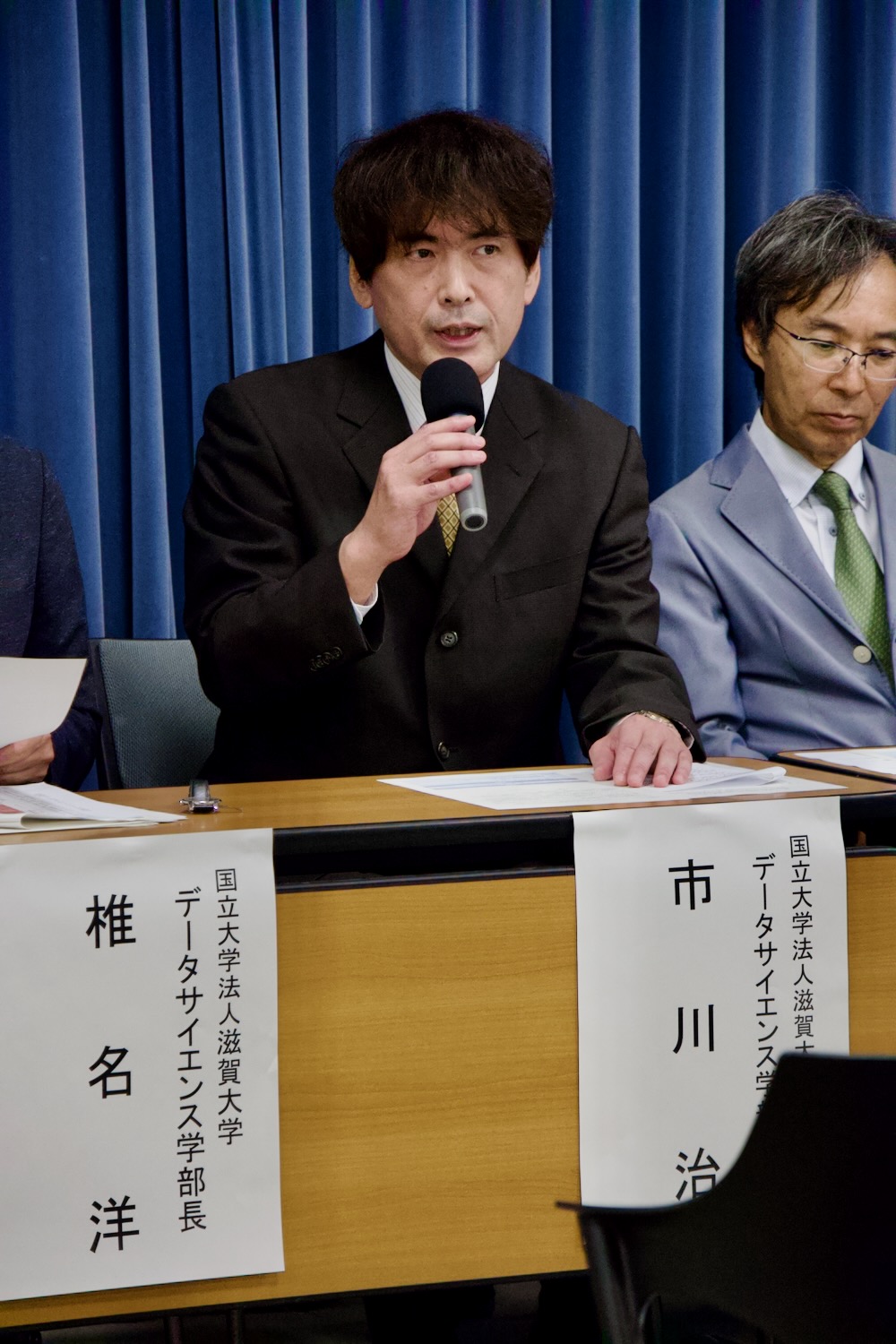
Professor Osamu Ichikawa of College School of Data Science also spoke about the efforts being made in a new course that the School of Data Science will be offering this fall. He said that the remarkable progress being made in generative AI, including ChatGPT and Stable Diffusion, necessitates the challenge of new areas of learning that are not found in traditional machine learning-centered curricula. He said that in the new course, students will learn a framework for collecting large amounts of data and extracting new insights from it, and then try to use generative AI to approach their own problems.
Data science enters a world with no correct answers
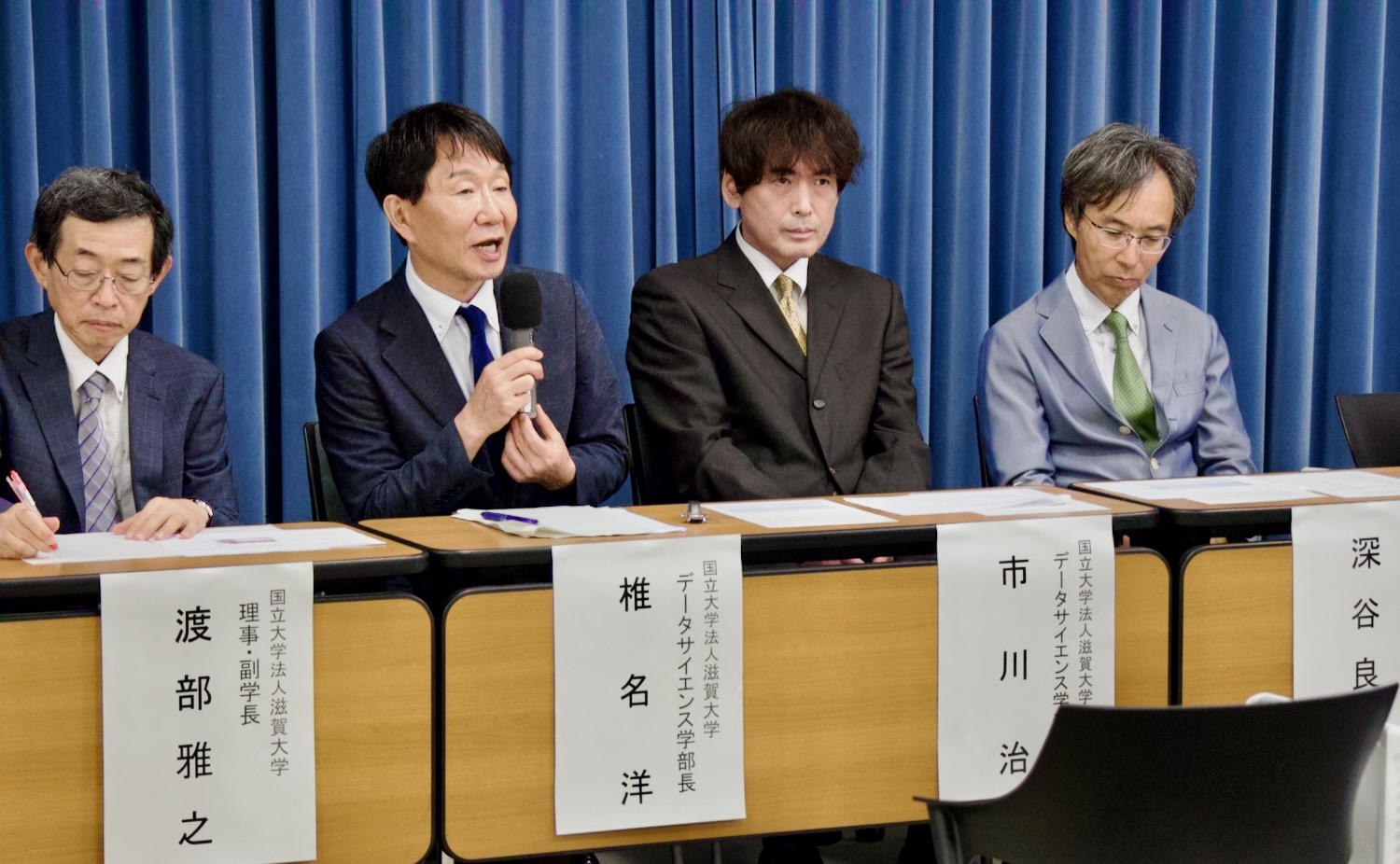
This was followed by a question and answer session, which led to a lively exchange of opinions.
In particular, the discussion covered the benefits that can be achieved through this collaboration between the two schools and future prospects.
Professor Ichikawa of College expressed his hopes for the clash of different fields, saying, "Collaborating with the arts field is an important step for data science to enter a world where there are no correct answers. Machine learning has a certain degree of clear measuring stick, but with generative AI there are no correct answers, and it is impossible to determine what value the results will have. I would like you to understand that we are pioneering a new world, and that by interacting with faculty and students from both schools, we will be embarking on a world where there are no correct answers."
Professor Miura of our college also mentioned research into mallet playing on percussion instruments as an example of performance science, explaining that by using motion capture to visualize the differences in musicality resulting from various playing techniques (ways of gripping the mallet), it is possible to contribute to performance and education with objective evidence. He said, "Performing music is in some ways similar to the field of sports science, an art of the moment. In sports, the visible results, such as speed, are clear, but performing music is difficult. First of all, I want to focus on improving my own skills by capturing and visualizing my performance from multiple angles, like looking at myself in a three-way mirror."
In addition, Professor Hiroshi Shiina, Dean of the Faculty of Data Science College, spoke about the specific relationship between data science and music, saying, "Data science is often likened to cooking. You can only make good food if you first have knowledge of the ingredients. If we could be provided with a variety of data from the deep world of music, we could perform some interesting analyses."
In response to a question about whether students would have the opportunity to take lectures at both schools, Professor Shiina and Professor Miura stated that it was possible that "we might give lectures to each other," and that "it would be great if we had the opportunity to learn cutting-edge data science."
I am intrigued to see what kind of results the collaboration between data science and music will bring, as this is the beginning of a world where there are no correct answers.
We will continue to share information about the collaboration and cooperation between our two schools on various occasions.
Contact for inquiries regarding this matter
Kunitachi College of Music Office of Public Relations
TEL.042-535-9500