
String, Wind & Percussion Music
Faculty of Music, Department of Performance & Composition, String, Wind & Percussion Music
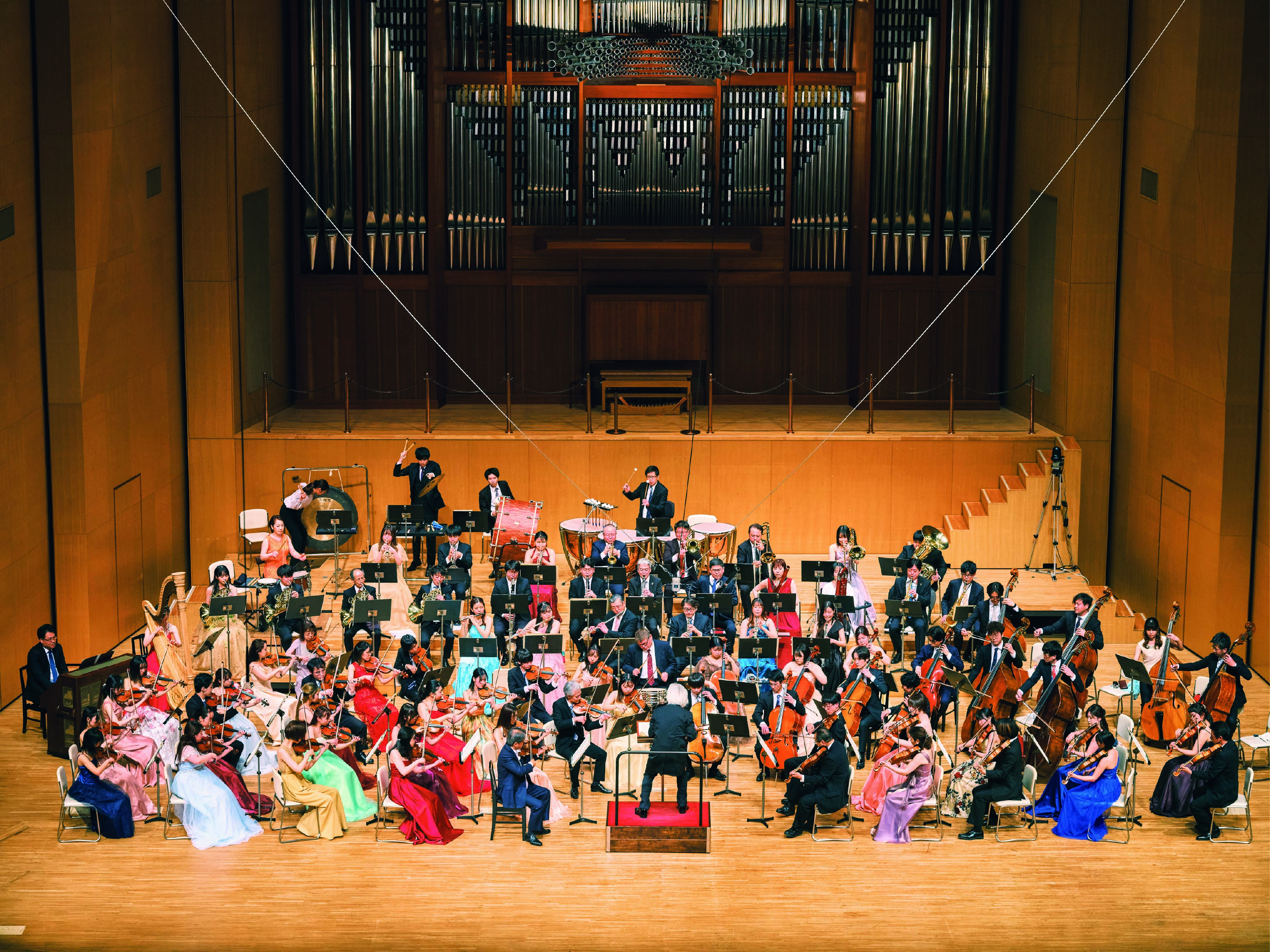
Learning Features
- Emphasis on "ensemble" education, where students create music as a team
- Top-class teachers from different majors and disciplines participate in lessons
- Acquire a high level of knowledge about musical instruments and increase your career options
Education that responds to diverse personalities
While aiming to improve individual performance techniques, the curriculum focuses on ensembles of instruments of the same family from the basic course, progressing to mixed ensembles and broadening the range of performance. Through collaboration with diverse musicians, students cultivate the teamwork and communication skills required not only in the world of music but also in society, fostering individuals who can thrive not only as soloists, orchestral musicians, wind band members, and chamber musicians, but in all fields where music is needed.
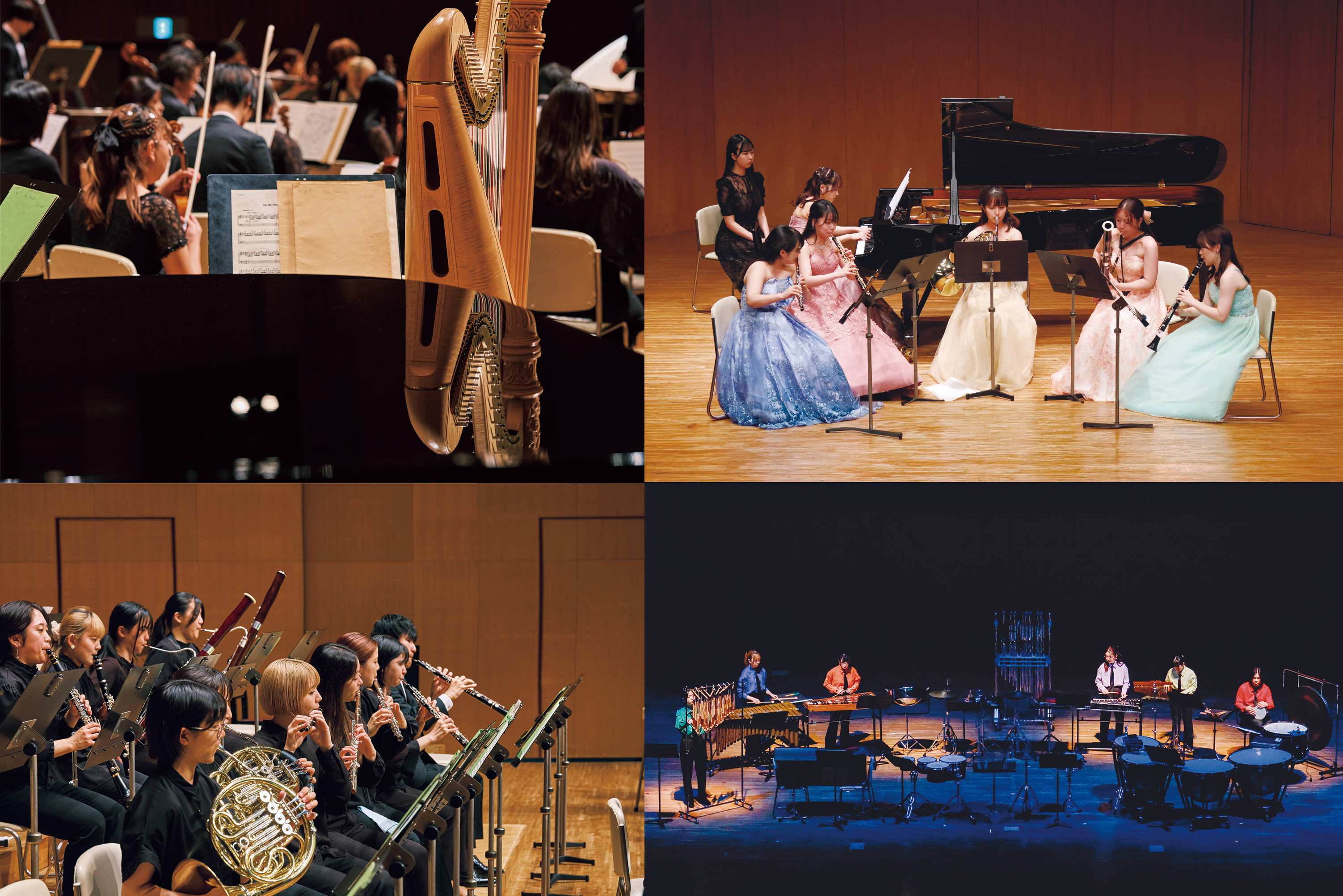
Class and Activity Introduction
Wind Orchestra
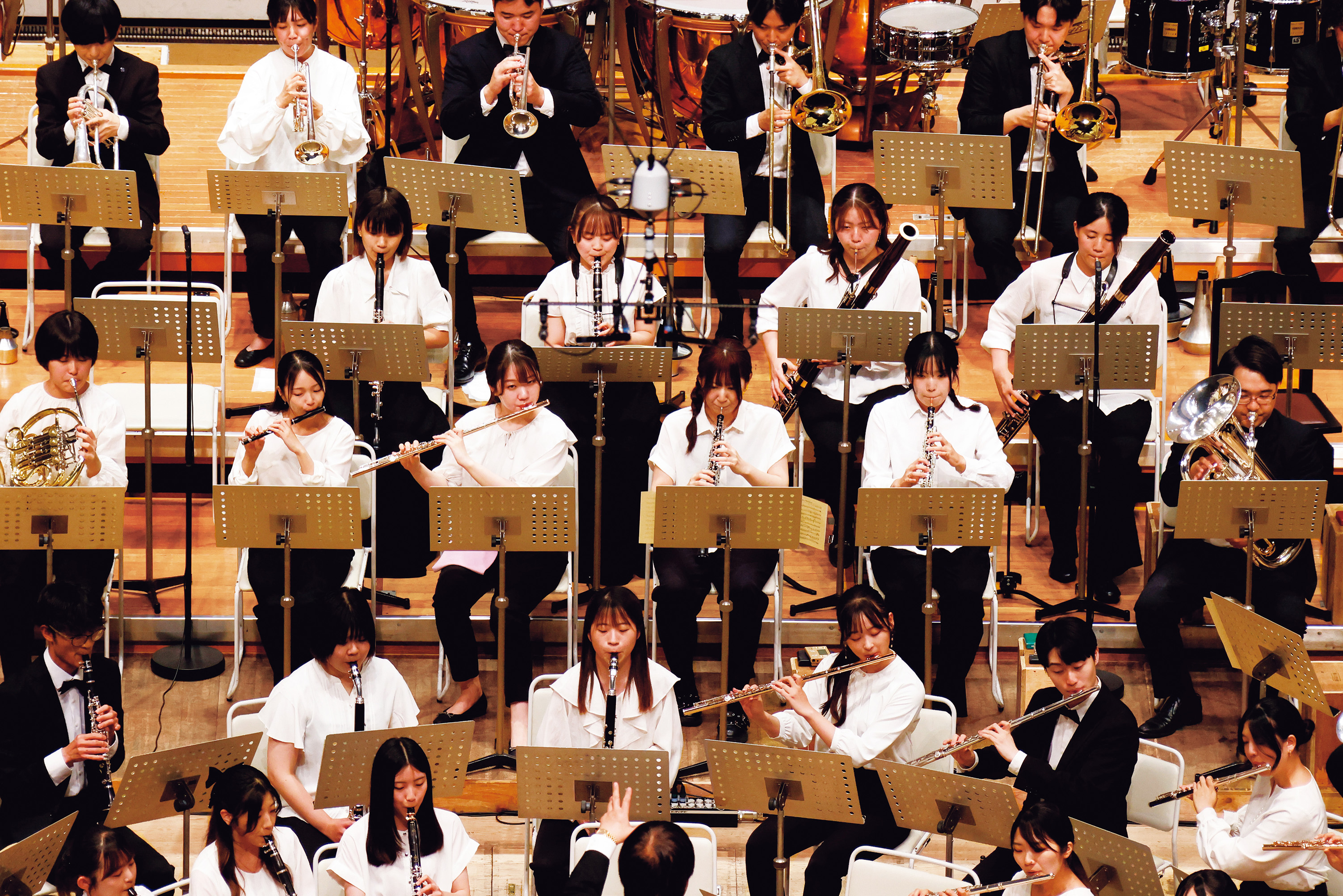
In their first and second years, students will focus on learning basic wind orchestra repertoire, and in their third and fourth years, they will perform a wide range of repertoire in the traditional Brass Orchestra and Symphonic Wind Ensemble, presenting their results in concerts both on campus and outside the school.
Orchestra
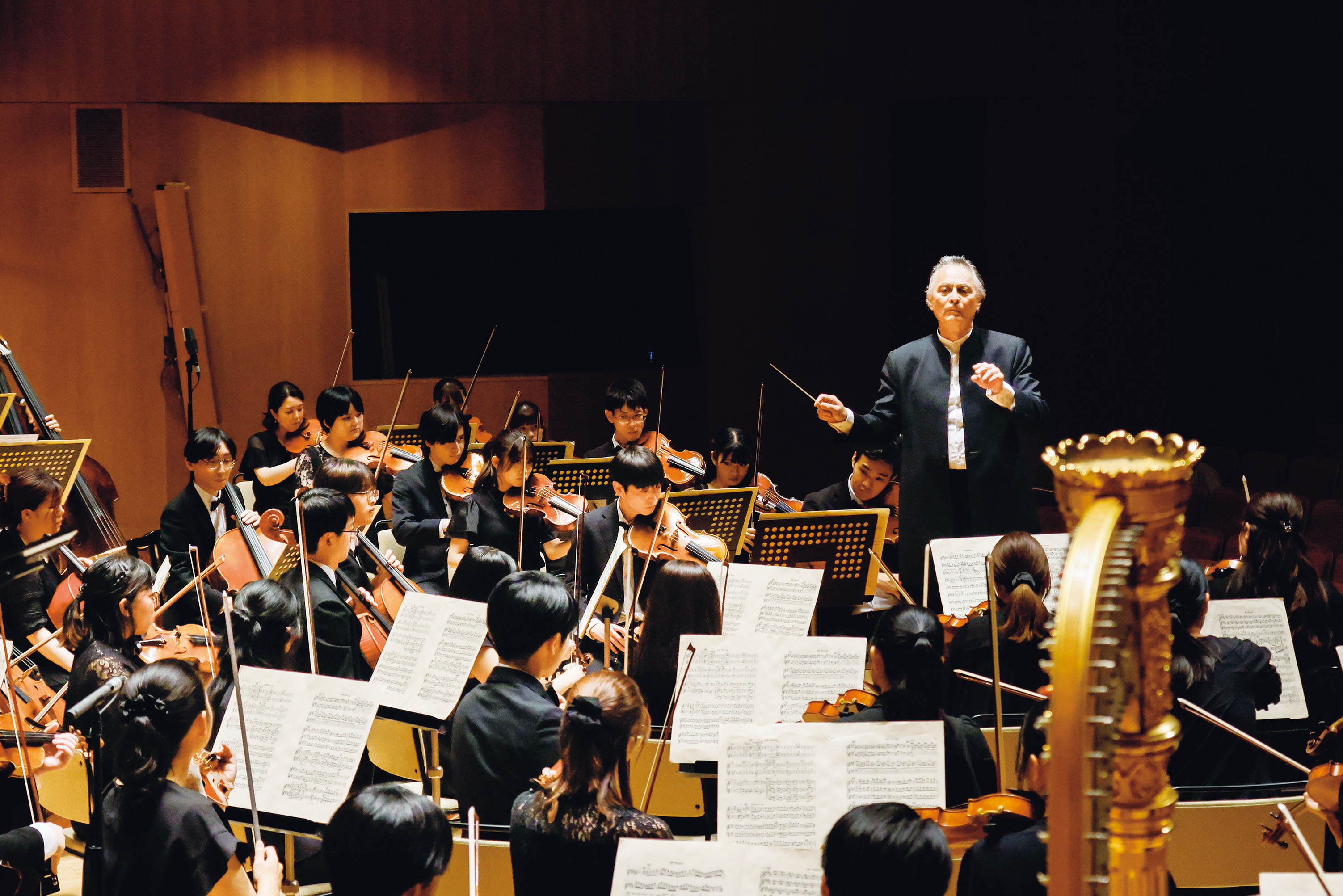
The school has two orchestras, one made up of first- and second-year students and one made up of third- and fourth-year students, which perform in regular concerts and other requested performances. Students Composition also provide music.
Basic Ensemble / Advanced Ensemble
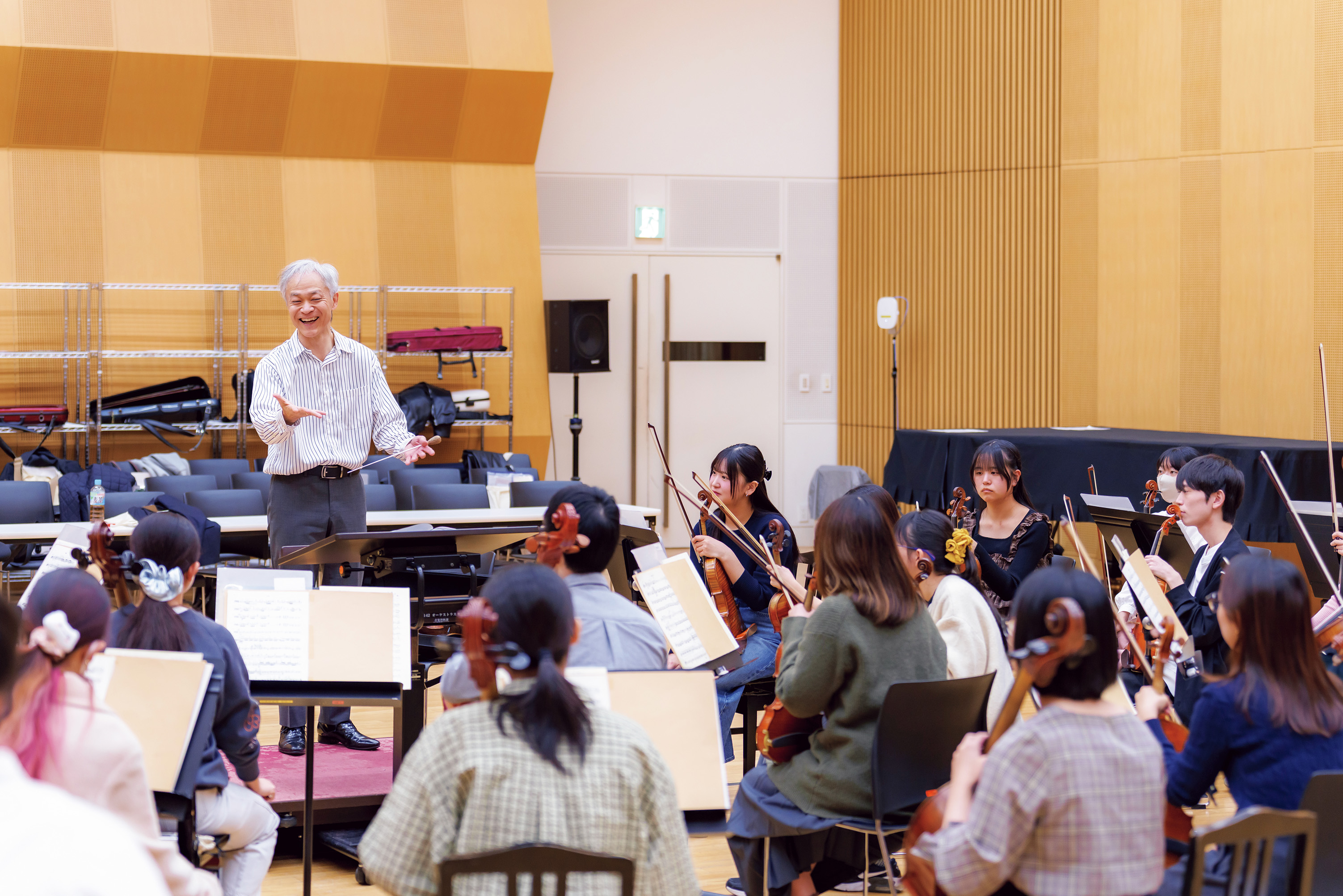
Students will learn about harmony of tone and pitch in both string and wind instrument ensembles, acquiring fundamental ensemble knowledge and techniques. They will also develop communication skills and social skills, cultivate teamwork and proactiveness, and understand the importance of ensemble playing.
The 57th Clarinet Orchestra Regular Concert
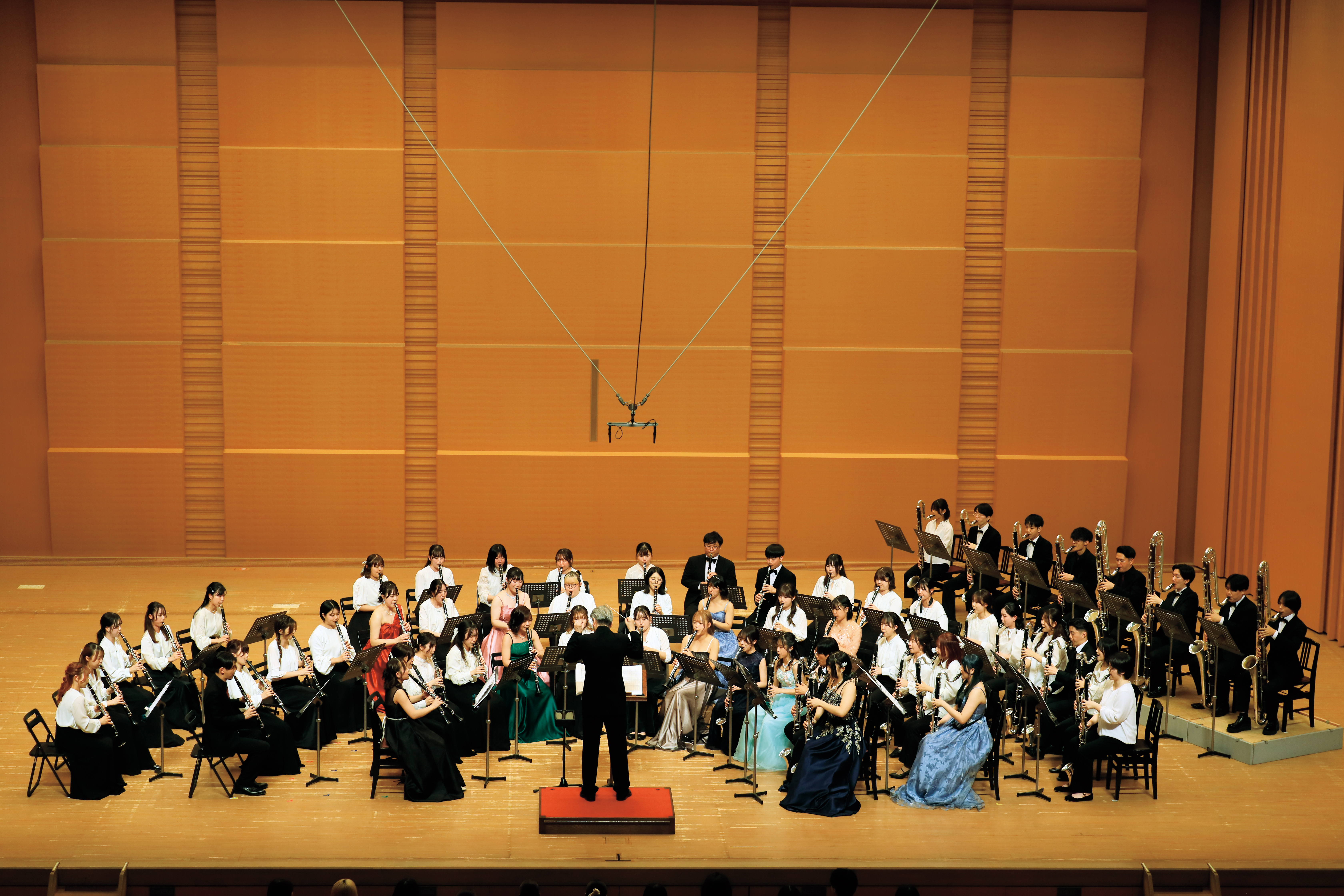
In November 2025, the 57th Clarinet Orchestra Regular Concert, featuring clarinet majors, was held. Under the direction and guidance of Professor Tomohiko Owada, the orchestra tackled all movements of L. v. Beethoven's Symphony No. 6, "Pastoral." They also performed other challenging pieces, such as F. Liszt's "Hungarian Rhapsody," filling the hall with the soft yet powerful sound of the clarinet. Performances by clarinet majors alone are held both on and off campus.
Student's Voice
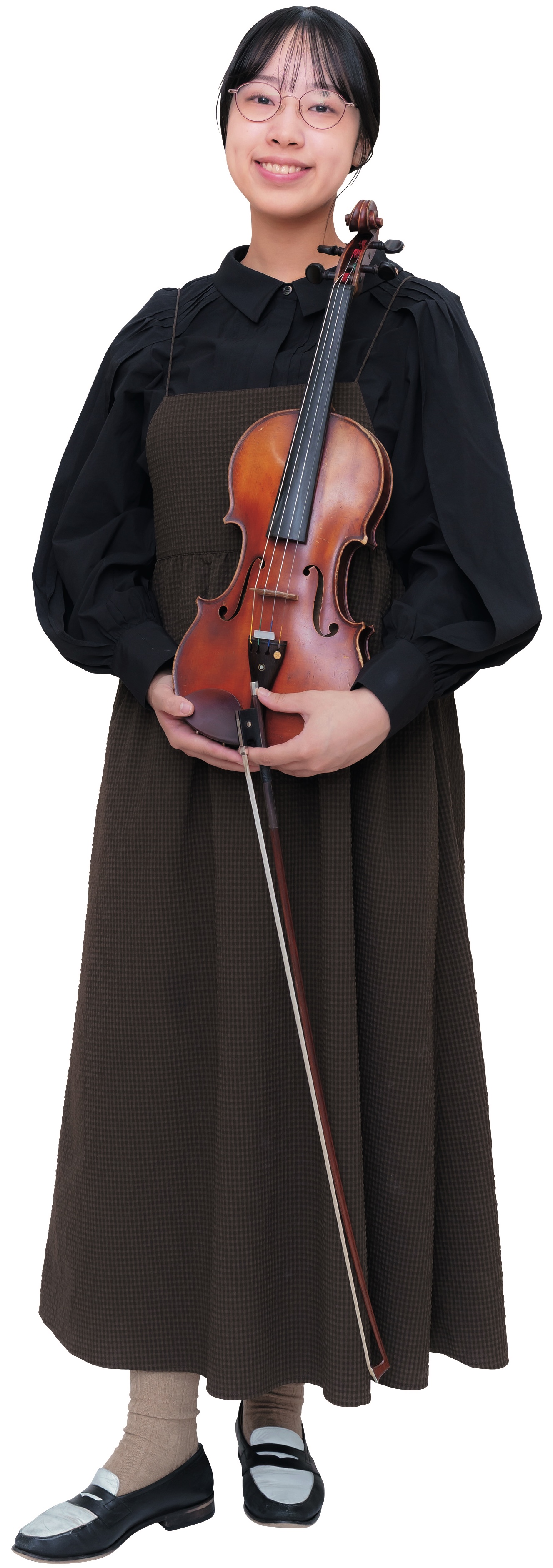
Having lots of experience performing in real concerts
It's been the biggest source of my growth.
Kyoka NISHIYAMA
Department Department of Performance & Composition String, Wind & Percussion Music (Violin), 4th year
Graduated from Tottori Prefectural Tottori Nishi High School, Tottori Prefecture
String, Wind & Percussion Music + Strings, Winds, and Percussion Soloist Course
Ensembles such as orchestras and chamber music require training in listening to the sounds of others more than your own. I'm getting a lot of training in that area at university. I performed in the orchestra pit for the first time in graduate opera. It was difficult because I had to listen carefully to the sounds around me, including the main vocals, but it was an exciting experience to play in complete darkness with a music stand light on. Since becoming a third-year student, I've been busy with many performances such as Vocal Music Chorus Concert, the Composition Exhibition, and the Regular Concert, but these are helping me grow. I think I'm able to apply what I learned in performances because I built a solid foundation in my first and second years.
Faculty Message
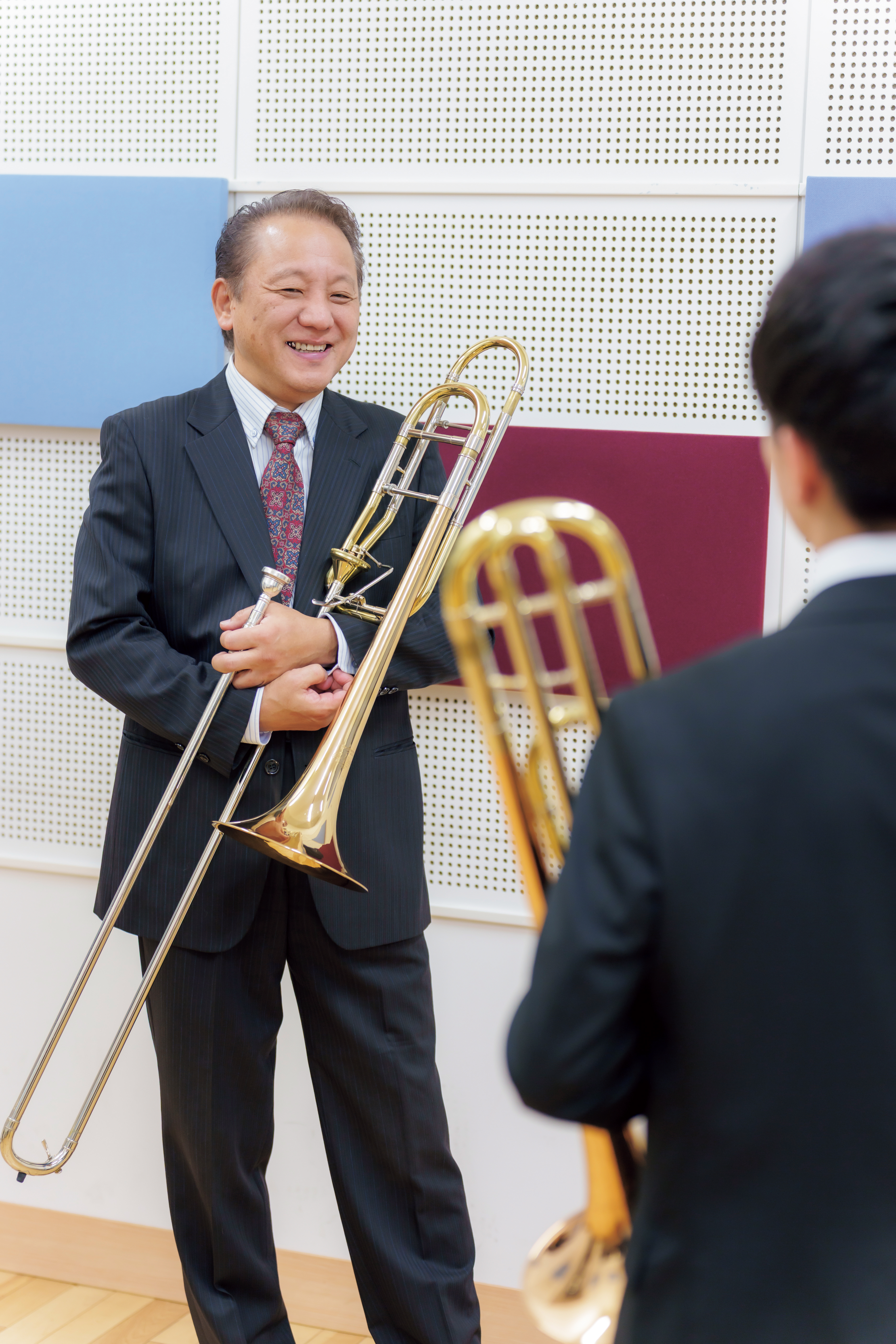
Everything about learning music enriches your life.
Haruki KISHIRA
String, Wind & Percussion Music
Specialty: Trombone
Learning music is not simply about acquiring technical skills. The emotions that arise from harmonizing with others, learning about the culture and history behind a piece of music, and the joy of connecting with others through music—all of these will enrich your university life and your life in general. "Learning together, growing together"—that's what Kunitachi College of Music is all about. The experiences and friends you meet here will surely provide strong support for your future.
<Story>
Since encountering the trombone at the age of nine, music has given me both challenges and joy. My 36 years with the Japan Philharmonic Orchestra, which I joined in my third year of university, my studies in Berlin, and my exploration of sound with the Trombone Quartet Zipangu—all these experiences have made me realize the power of music to connect people. Now, as an educator, I find great fulfillment in sharing that joy with my students and creating new sounds together.
<Profile>
While a third-year student in the Instrumental Music Department at Kunitachi College of Music Music, he joined the Japan Philharmonic Orchestra. He received the Yatabe Prize and performed at the Yomiuri Newcomer Concert. As an overseas training fellow for artists dispatched by the Agency for Cultural Affairs, he studied at the Berlin University of the Arts. He studied under Shoji Hara, Kikuo Sato, and W. Hagen. He is a member of the Trombone Quartet Zipangu and the Tokyo Brass Symphony.
Lesson Video
Violin
P. Tchaikovsky: 1st movement from Violin Concerto in D major, op. 35
Flute
JSBach: Sonte E-Moll, 1st movement from BWV1034
Clarinet
C. Debussy: Première Rhapsodie
Saxophone
W. Ferling: No. 1 from Quarante-Huit Ètudes pour tous les Saxophones
Trumpet
V. Brandt : Concertpiece No.1 op.11
Educational Goals
This major will develop students who can acquire rich musicality, a wide range of musical knowledge and techniques, and who can cooperate with people with diverse values, and who can thrive not only as soloists, orchestral musicians, wind band musicians, and chamber musicians, but also in a variety of fields that require music.
Admissions Policy
We are looking for people who are eager to learn basic academic ability, musical knowledge, and performance techniques, and who wish to utilize the power of music to actively contribute to society in a variety of fields.
Curriculum Policy
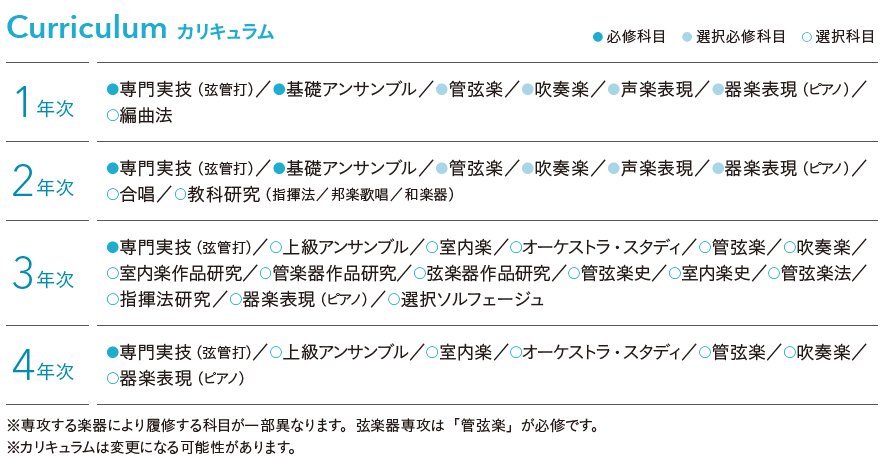
Ensembles using related instruments are a core part of the curriculum, starting with the foundational course, to help students acquire communication skills that are essential not only as soloists, orchestralists, and wind band performers, but also as members of society. Through high-quality individual lessons in their specialized instrument and comprehensive general Liberal Arts at Kunitachi, students acquire comprehensive competencies as members of the music community who can adapt flexibly to diverse cultures and societies. The specialized course includes a "Soloist Course" aimed at developing more advanced performance skills and artistic talent as performers. Also, "Orchestral Studies" is a required and elective course for aspiring orchestral musicians, providing practical experience. In orchestral, wind band, and chamber music courses, students hone their skills and the spirit of creating music together, focusing on collaboration with others, with the goal of performing in various concerts both on and off campus.
Diploma Policy
Through not only solo performances but also various ensembles, students learn a variety of playing techniques and repertoires, acquire high performance skills and rich expressive abilities, and acquire the ability to demonstrate their own creativity and presence.