
Keyboard Instruments Music
Faculty of Music, Department of Performance & Composition, Keyboard Instruments Music
Learning Features
- Developing musicality and intelligence that can be utilized in a variety of fields
- Education that respects each individual's individuality and sensibility
- A full range of group lessons, including duets and ensembles
Exploring the diverse charms of keyboard instruments
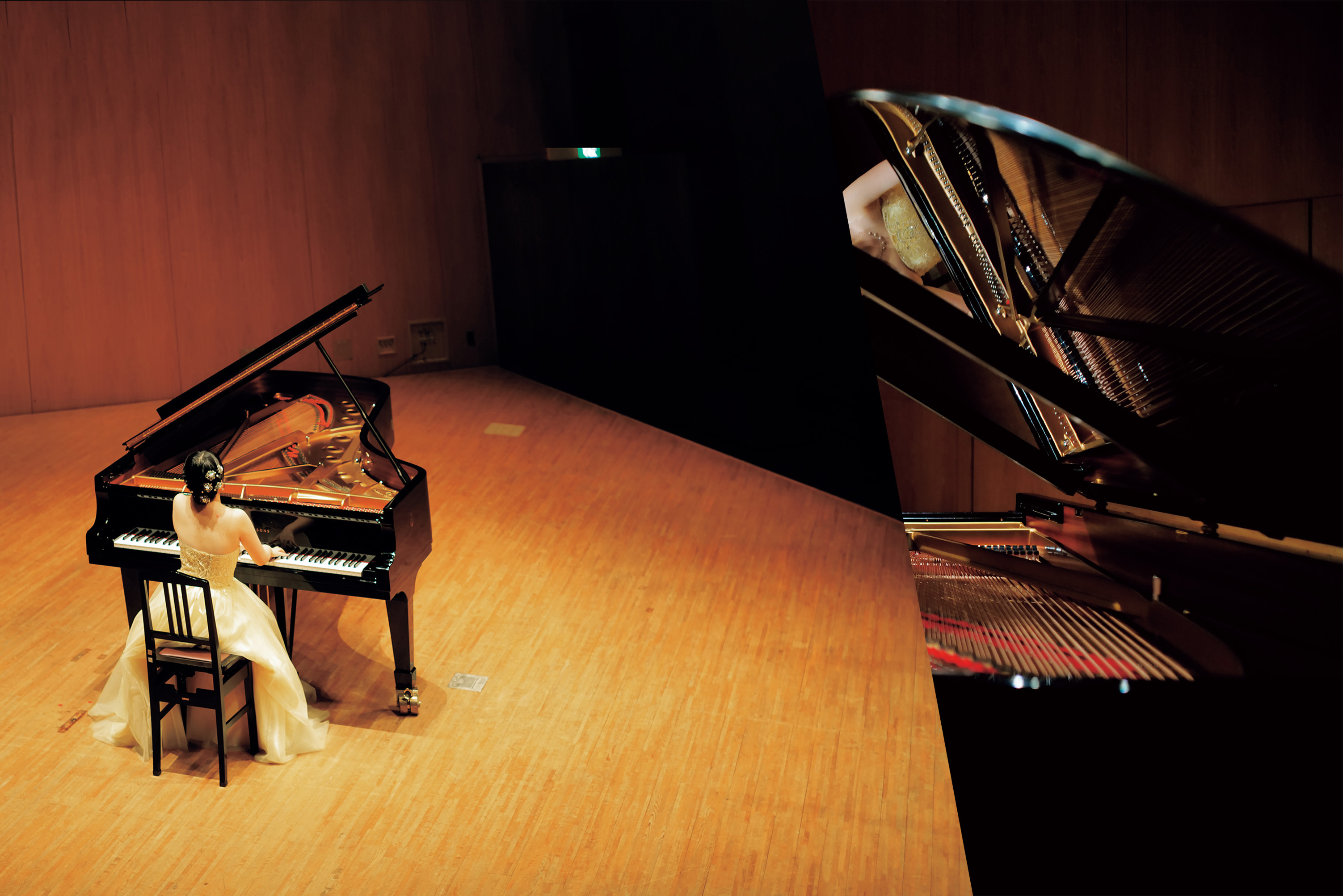
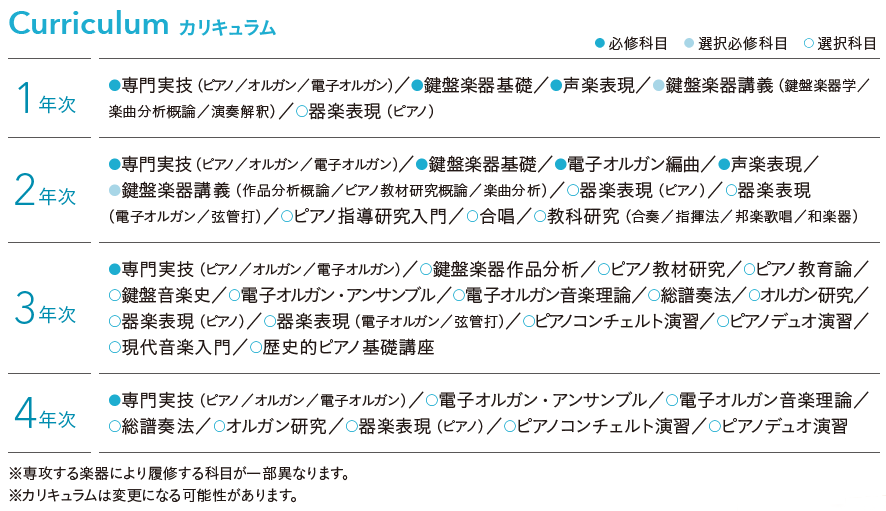
We aim to cultivate students' sensibilities and individuality, helping them realize not only musical performance but also a life lived in harmony with music. In the first and second years, students focus on the fundamentals, while in the third and fourth years, courses such as the "Keyboard Instrument Soloist Course" "Ensemble Piano Course," "Piano Pedagogy Course," and "Improvisational Piano Performance Course" are available to broaden each student's potential. Students can also take courses such as "Piano Concerto Practice" and "Piano Duo Practice," allowing them to explore the diverse charms of keyboard instruments in a wide range of ways.
Class and Activity Introduction
Specialized Practical Skills (Piano)
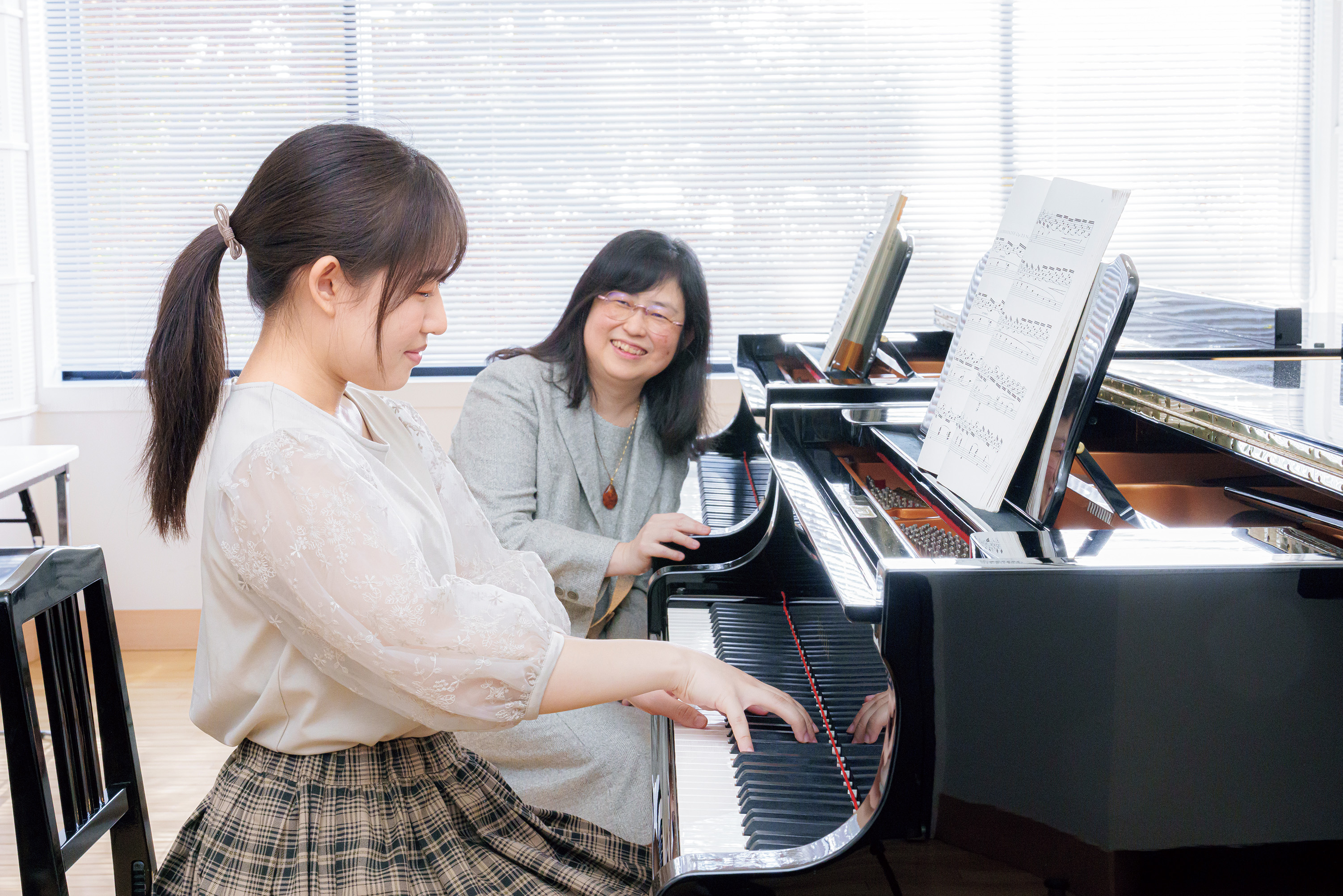
In addition to learning basic piano techniques, students will also develop rich expressive abilities and acquire performance techniques that are in line with contemporary styles.
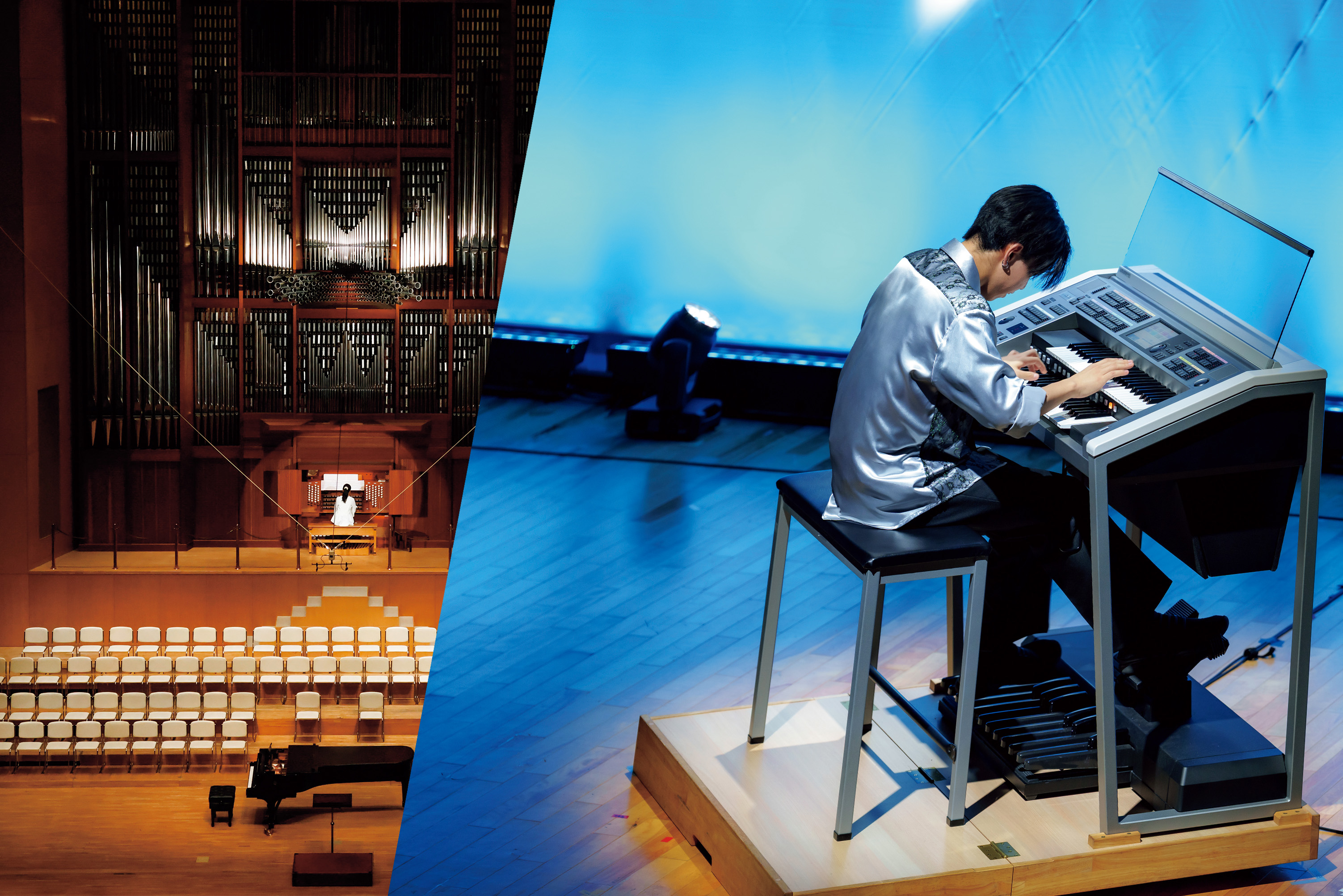
Specialized Practical Skills (Organ)
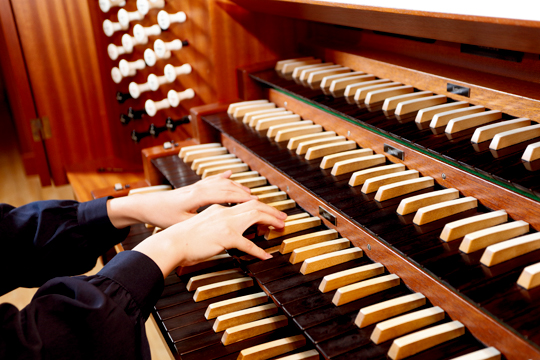
Students will comprehensively learn fingering, articulation, touch, and other technical and expressive aspects, as well as styles that differ across eras and countries (regions).
Specialized Practical Skills (Electronic Organ)
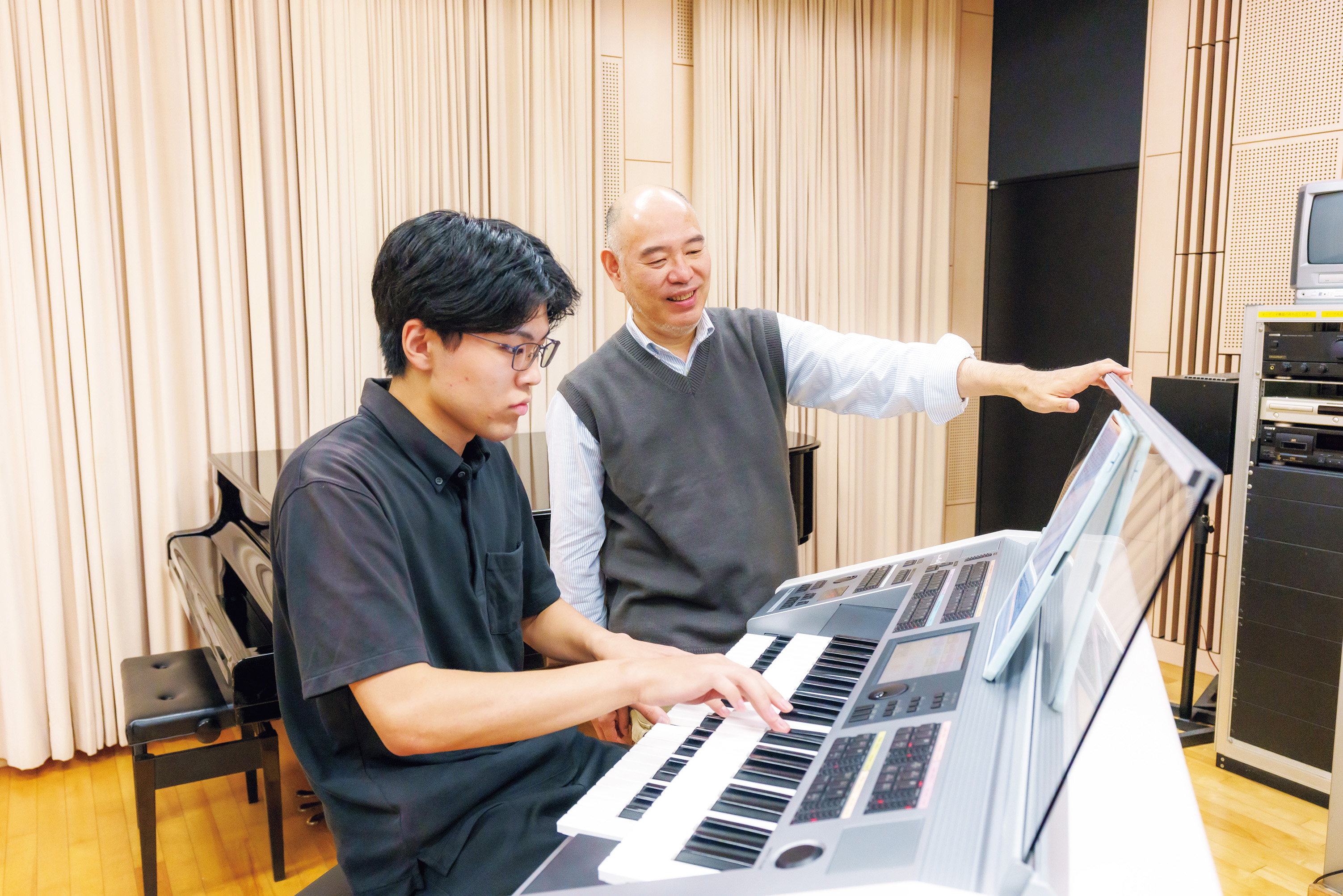
You will learn everything from reviewing the basics to arranging and composing techniques and creating solo pieces, and acquire the ability to express yourself in a way that will appeal to everyone.
in Focus - Keyboard Instrument Basics
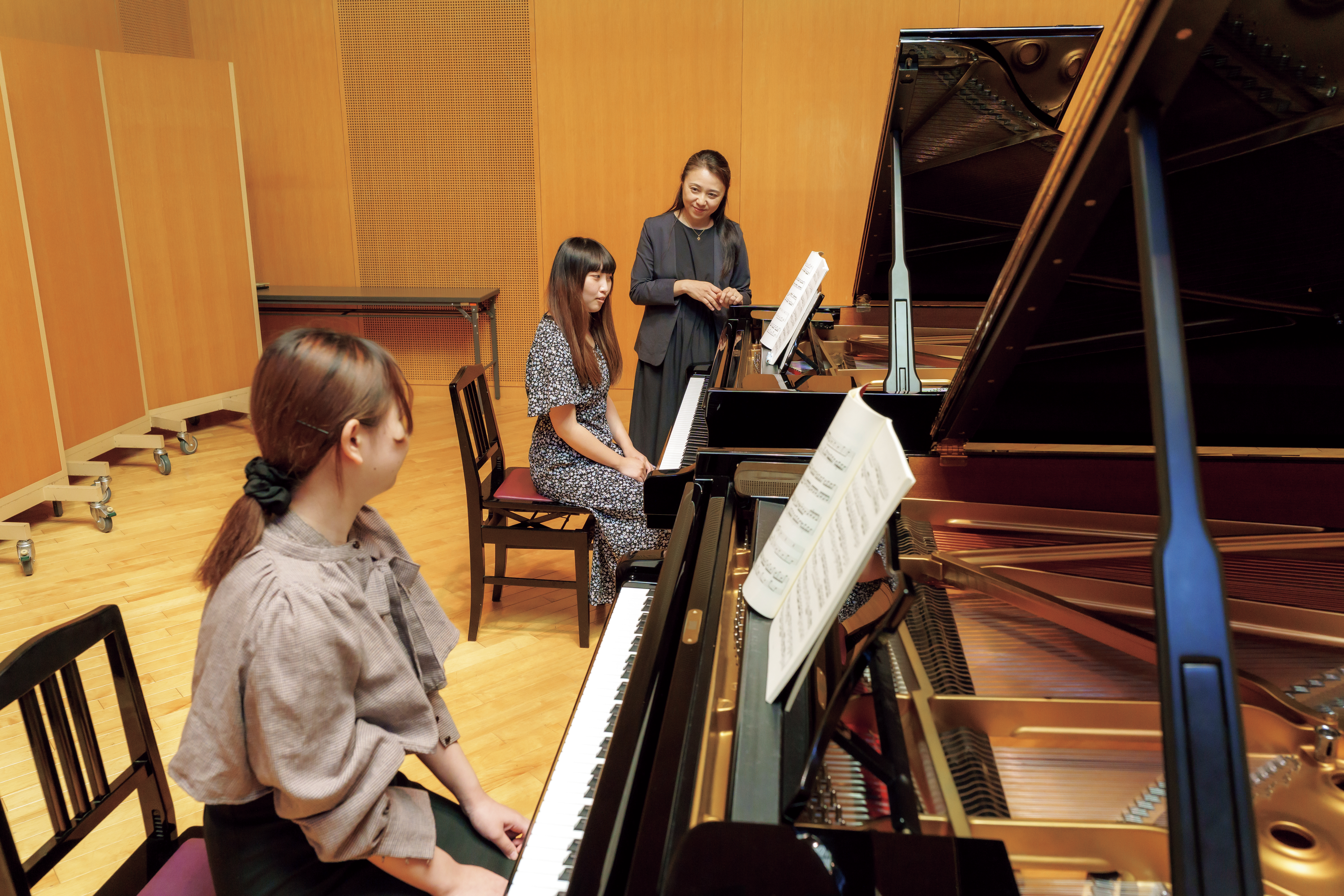
Students learn rhythm, melody, and harmony as an integrated whole, developing not only the ability to translate written music into sound, but also the expressive skills and sight-reading abilities necessary for more musical performance. In the first year, they learn the fundamentals of performance through sight-reading, transposition, and duets, while in the second year, they also study piano teaching methods. They acquire the ability to handle a variety of situations, including solos, ensembles, and accompaniments.
Student's Voice
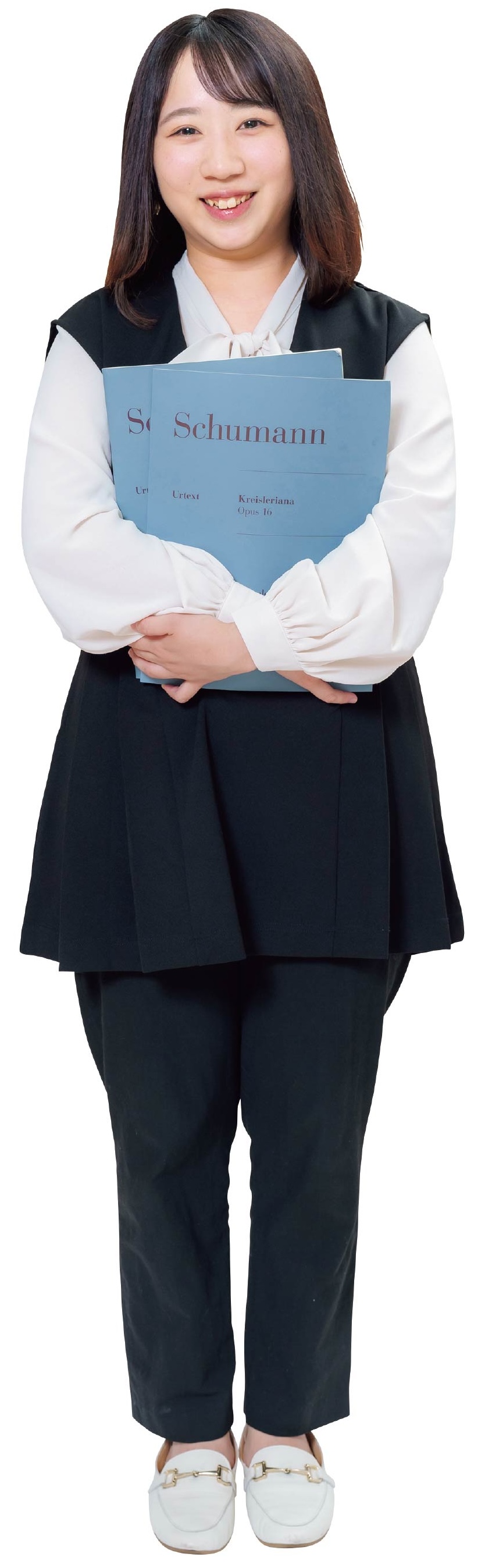
Even in ensemble performances
I learned that it's important to have your own opinions.
Shiori YAMAGUCHI
Department Department of Performance & Composition Keyboard Instruments Music (Piano), 4th year
Graduated from Kureha High School, Toyama Prefecture.
Keyboard Instruments Music + Keyboard Instrument Soloist Course
The classes I found most beneficial were "Piano Concerto Practice" and "Chamber Music," taught by a string instrument teacher. Because these classes involve actual performance, I was able to learn the skills necessary for ensemble playing and how to play with an orchestra in mind, through practical experience. I also learned that in ensemble playing, it's important to assert yourself in a positive way and to have confidence. The lesson using a replica of the fortepiano owned by Collection for Organology was also very memorable. Playing this historical piano, which is completely different from a modern piano, gave me many insights. I hope to continue to be exposed to a lot of music and grow both musically and as a person.
Faculty Message
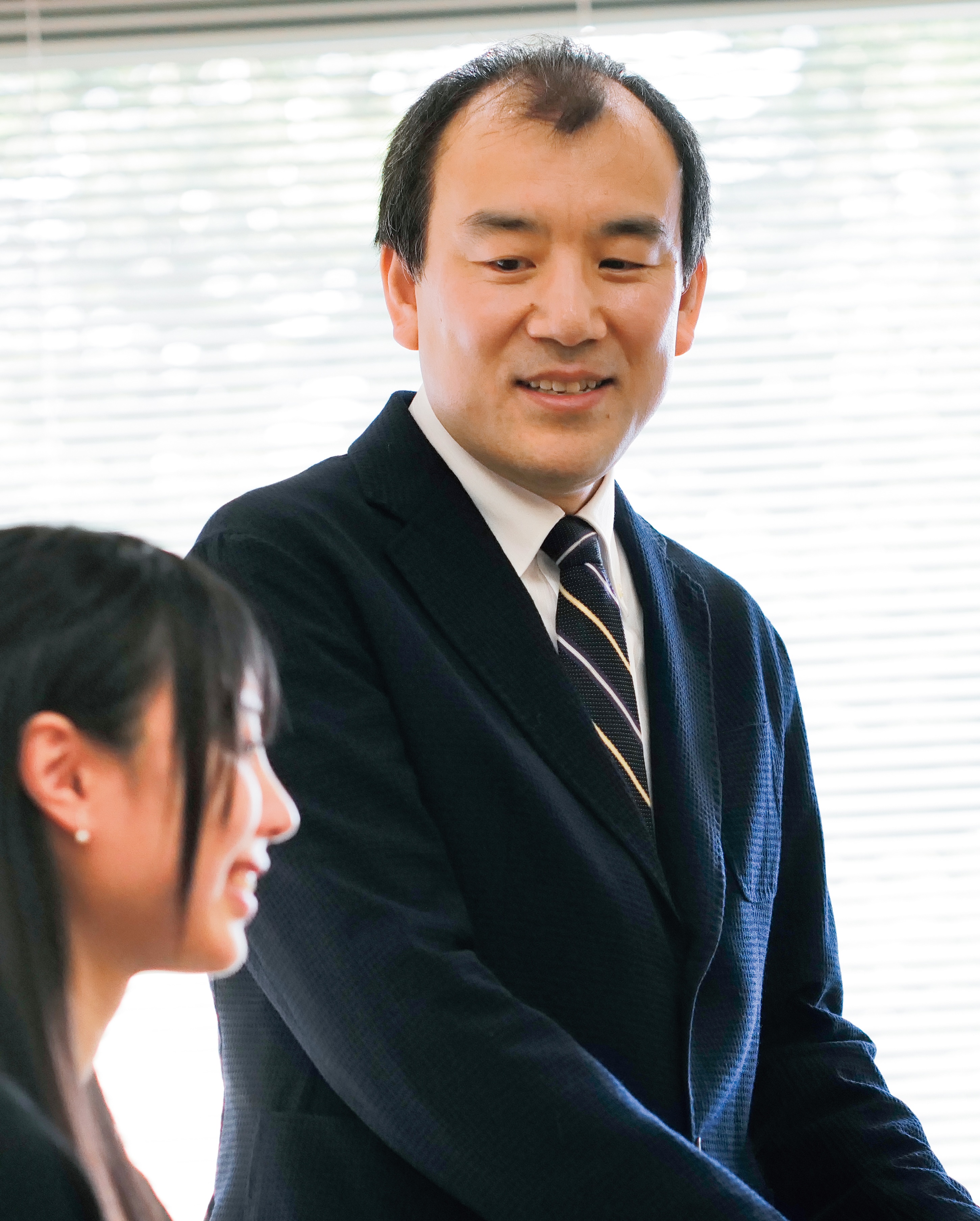
Let's explore together the "emotions" that composers convey through their musical scores.
Yosuke NIINO
Keyboard Instruments Music
Specialty: Piano
I dedicate myself daily to making the piano sing. To sing a melody requires emotion. Let's explore together how composers conveyed those overflowing emotions through musical scores. Young people possess a fresh aesthetic sensibility and a creative power that transcends boundaries. These stimulate my own curiosity and remind me of the fundamentals of learning. I wholeheartedly dedicate myself to teaching, hoping to empower you as you pursue your dreams.
<Story>
Practice time is a solitary but precious time for self-reflection. But once you step onto the stage, the sounds you produce resonate with the audience, and a dialogue is born. It is this duality that makes art so wonderful. To witness a student discover their own sound and shine on stage is an irreplaceable joy.
<Profile>
After attending the Music High School attached to Faculty of Music of Tokyo University of the Arts, she graduated from Faculty of Music of Tokyo University of the Arts. She completed the advanced course at the Conservatoire National Supérieur de Musique et de Danse de Paris with a first prize by unanimous decision of the judges, and also completed the soloist course at the same conservatory. She has won top prizes in various international competitions, including second prize at the 49th Maria Canals International Competition and first prize at the Paris Madeleine de Valmarte Piano Competition. She has performed with orchestras both in Japan and abroad, including the Mariinsky Theatre Primorsky Stage Symphony Orchestra. She is an associate professor at Kunitachi Kunitachi College of Music Music and its graduate school, and a part-time lecturer in the music department at Kanagawa Prefectural Sagamihara Yaezakura High School.
Lesson Video
F. Schubert: Sonate für Klavier No.16 A-moll D845 op.42 3rd movement
4th movement
Educational Goals
This program cultivates students' abilities to be active in various musical fields, such as performers and instructors, through the acquisition of a wide range of musical knowledge, solid performance techniques, and expressiveness. Furthermore, it cultivates individuals with the insight to contribute not only to music but also to society at large.
Admissions Policy
We are looking for people who wish to play an active role in society as performers and instructors, who take music seriously, and who are motivated to strive to improve themselves.
Curriculum Policy
In the foundation course, students learn the three elements of music - rhythm, melody, and harmony - as a whole, and acquire the skills to connect them to musical expression and apply them to actual performances. They also acquire musical knowledge that forms the foundation of performance, such as keyboard instrumentology, music analysis, and performance interpretation. In the specialized course, students deepen their specialized and multifaceted knowledge, including work analysis and teaching material research. They can also learn ensemble and teaching methods in line with their individual aspirations and career paths, enhancing their practical skills in various musical fields and in society. In the specialized practical skills learned through the foundation and specialized courses, students hone true performance techniques that enable self-expression by mastering a wide range of repertoire from various eras and styles.
Diploma Policy
Students will tackle pieces from various eras, from the Baroque to the modern era, and acquire high performance skills that incorporate a sense of style and originality, while also acquiring the ability to express themselves through keyboard performance.
Acquire the ability to perform in a variety of performance situations, including not only solo but also ensemble and accompaniment.