
Vocal Music
Faculty of Music, Department of Performance & Composition, Vocal Music
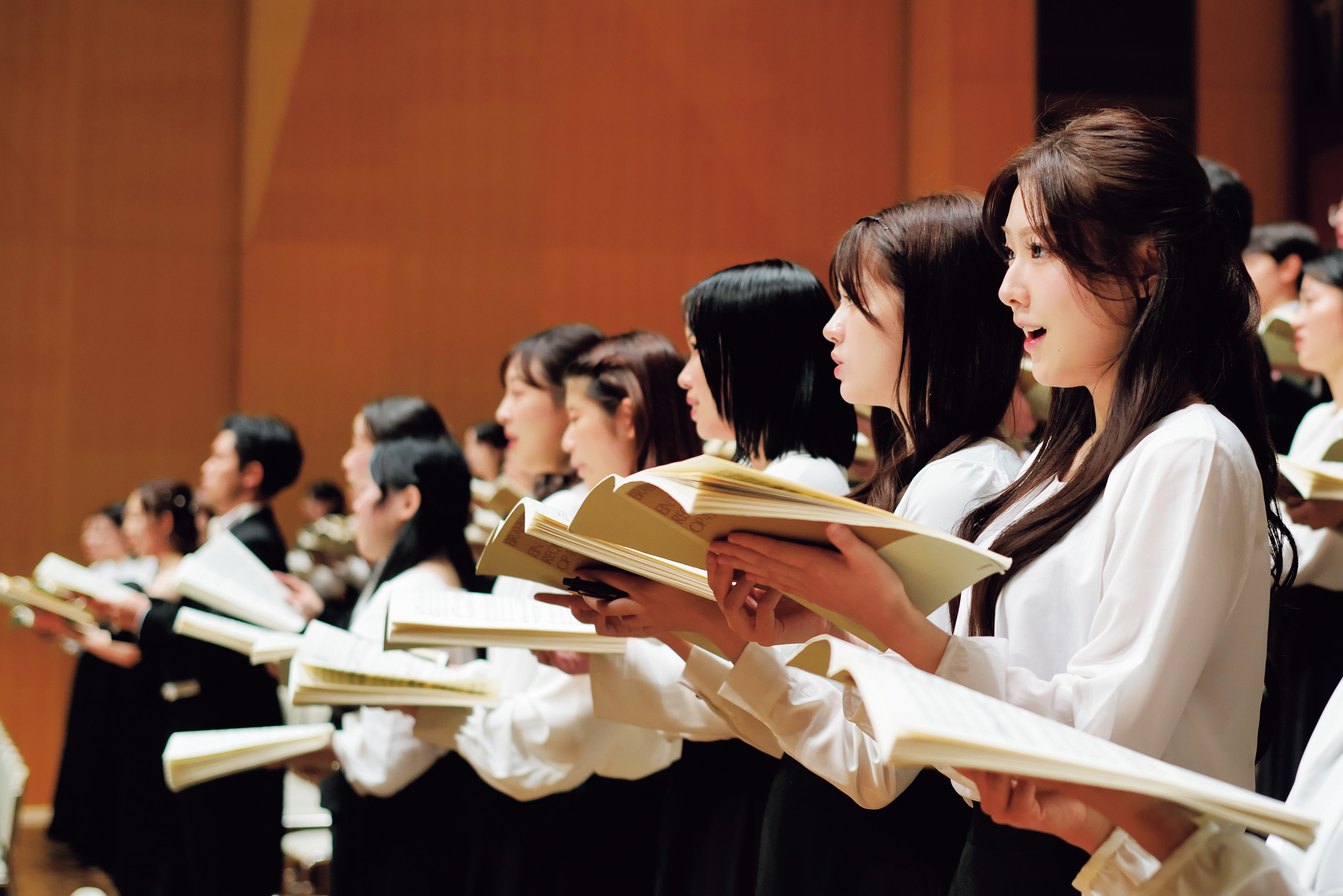
Learning Features
- First, learn the basics of vocal music through "songs"
- Acquire expression methods that overcome language barriers
- You can receive a wide range of education to become a vocalist, educator, choral leader, etc.
Developing expressive abilities that extend beyond words
We build your voice from the ground up, developing the ability to perform on all stages, including opera and art songs. While mastering correct vocalization, we also place emphasis on deepening your understanding of the composition and background of the works and refining your expressive abilities. In addition to Japanese, we teach other languages such as Italian, German, French, and English, paying attention to the subtle nuances of vowels and consonants in each language, and guiding you to sing in a way that deeply conveys emotions and scenes to the listener.
Class and Activity Introduction
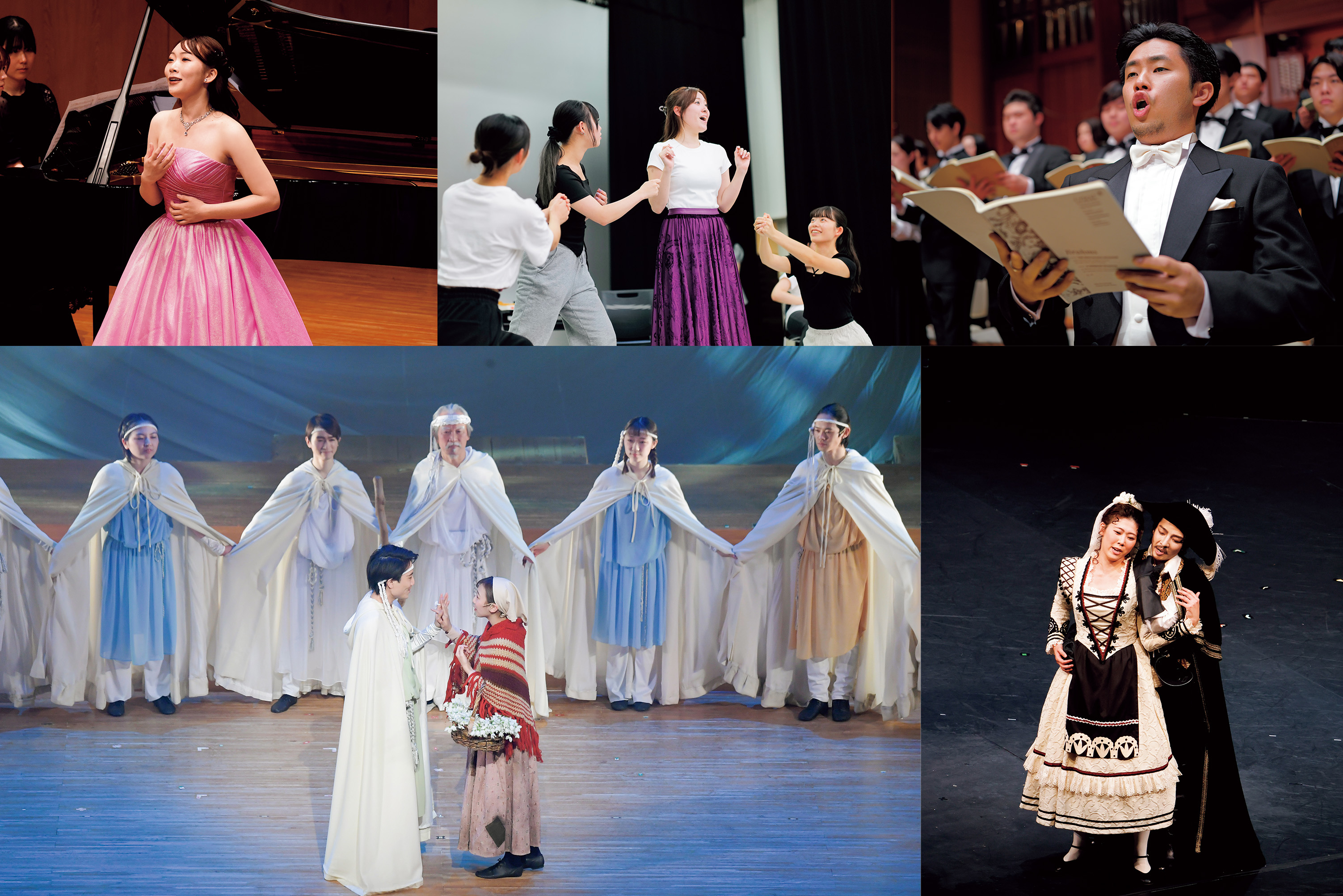
Chorus
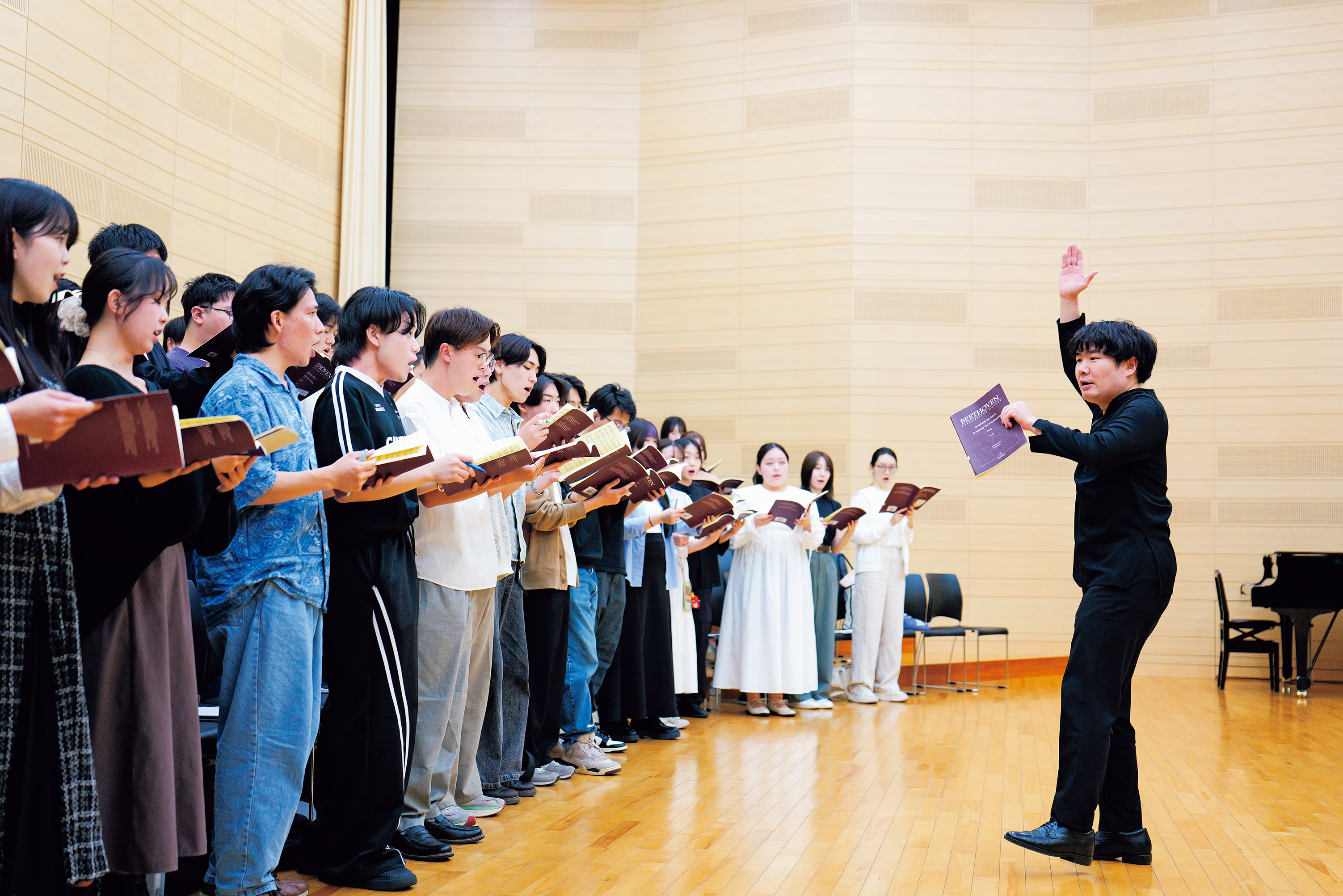
Prioritizing the composer's intentions, students will develop a sincere approach to reading musical scores and performing, while also learning the joys and challenges of performance and expression through choral singing.
Body expression
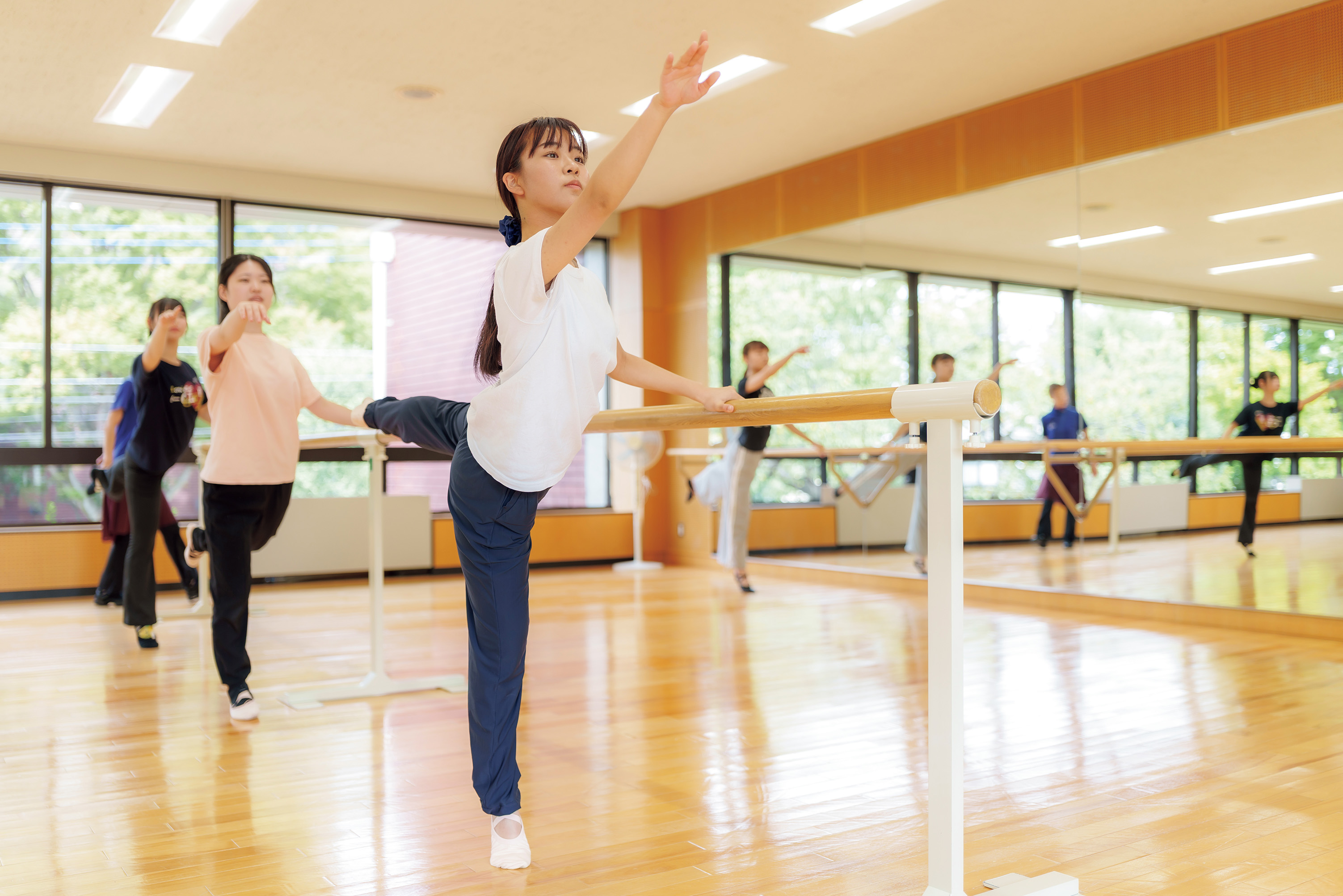
Through ballet lessons, physical training, and theater games, students acquire the physical and bodily awareness necessary for performers in stage productions, as well as the physical and emotional expression required to "communicate" with the audience in the performing arts.
Musical Practice
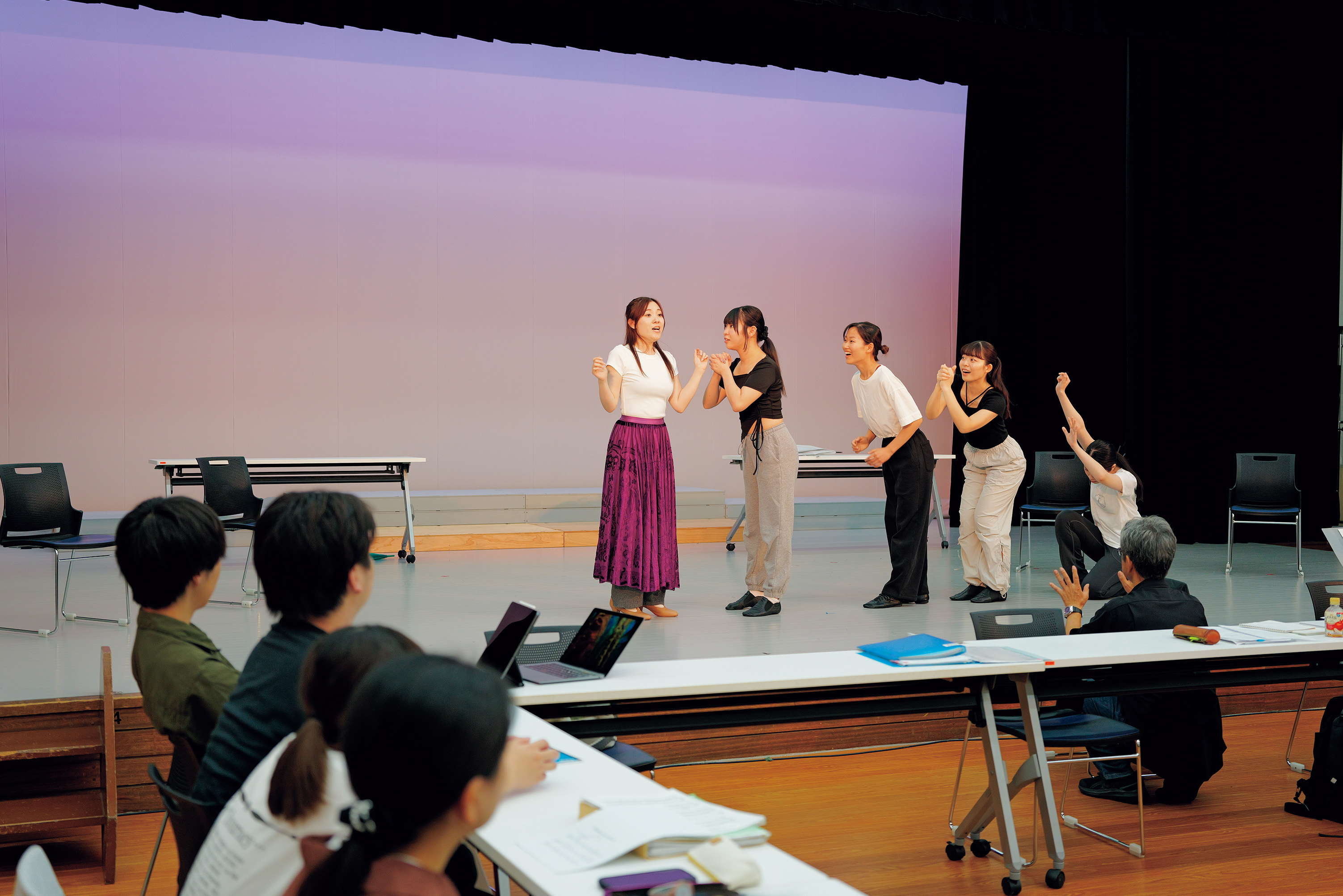
Using scenes from musicals as material, students will engage in ensemble exercises to cultivate fundamental musical and acting skills and develop their expressive abilities. Through collaboration, they will enhance their communication skills while learning methods of stage performance.
Students can also take "Basic Musical Theatre Workshop" from their first year.
In Focus: Learn in depth through courses that lead to your desired path.
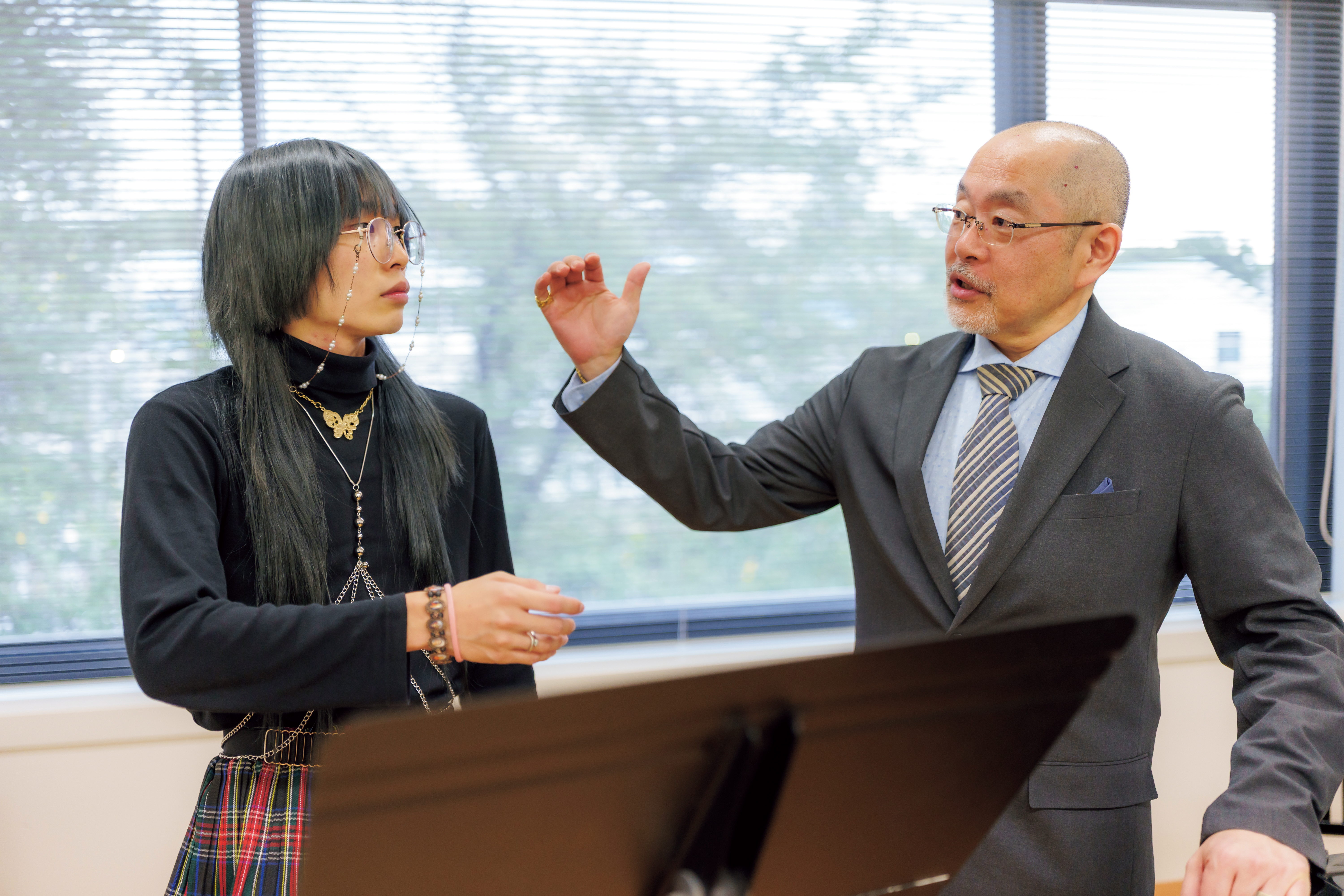
In the specialized courses starting in the third year, students can choose from more specialized courses such as the "Song Soloist Course," "Opera Soloist Course" and "Musical Theatre Course" (selection-based), where they can deeply learn the necessary vocal abilities, knowledge, and techniques. In addition, a wide range of courses are offered for those who wish to become educators or vocal coaches.
Hinata HIRAKAWA
Fourth year student, Vocal Music Department of Performance & Composition
Graduated from Tokyo Metropolitan Comprehensive Arts High School
Vocal Music + Song Soloist Course
Student's Voice

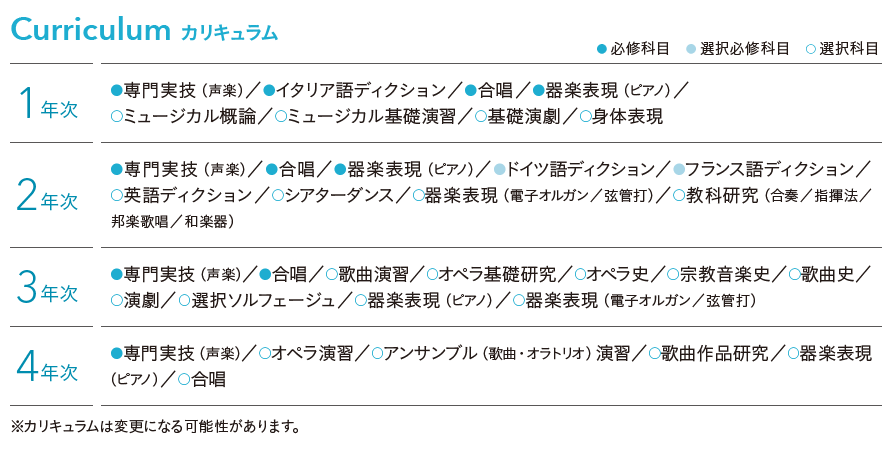
The skills cultivated in the required subject of Diction
It's been extremely useful in practice.
An ITO
Fourth year student, Vocal Music Department of Performance & Composition
Graduated from Iwate Prefectural Furaikata High School
(Currently: Prefectural Nansho Mirai High School)
Vocal Music + Opera Soloist Course
In my first year, I was required to study Italian diction, and in my second year, I could choose to study German or French diction. It was challenging at first because it was an unfamiliar language, but by thoroughly learning the meaning and pronunciation of words using actual songs, I was able to grasp the nuances embedded in the lyrics, and I felt that it increased the persuasiveness of my singing, so I enjoyed the process. I feel that this foundational skill I cultivated has been extremely useful in practical specialized subjects such as "Special Opera Workshop" after advancing to my third year course. In the future, I aspire to become a professional musician, so I would like to go on to graduate school to acquire deeper expertise and practical skills, and forge my own path in the world of music.
Faculty Message
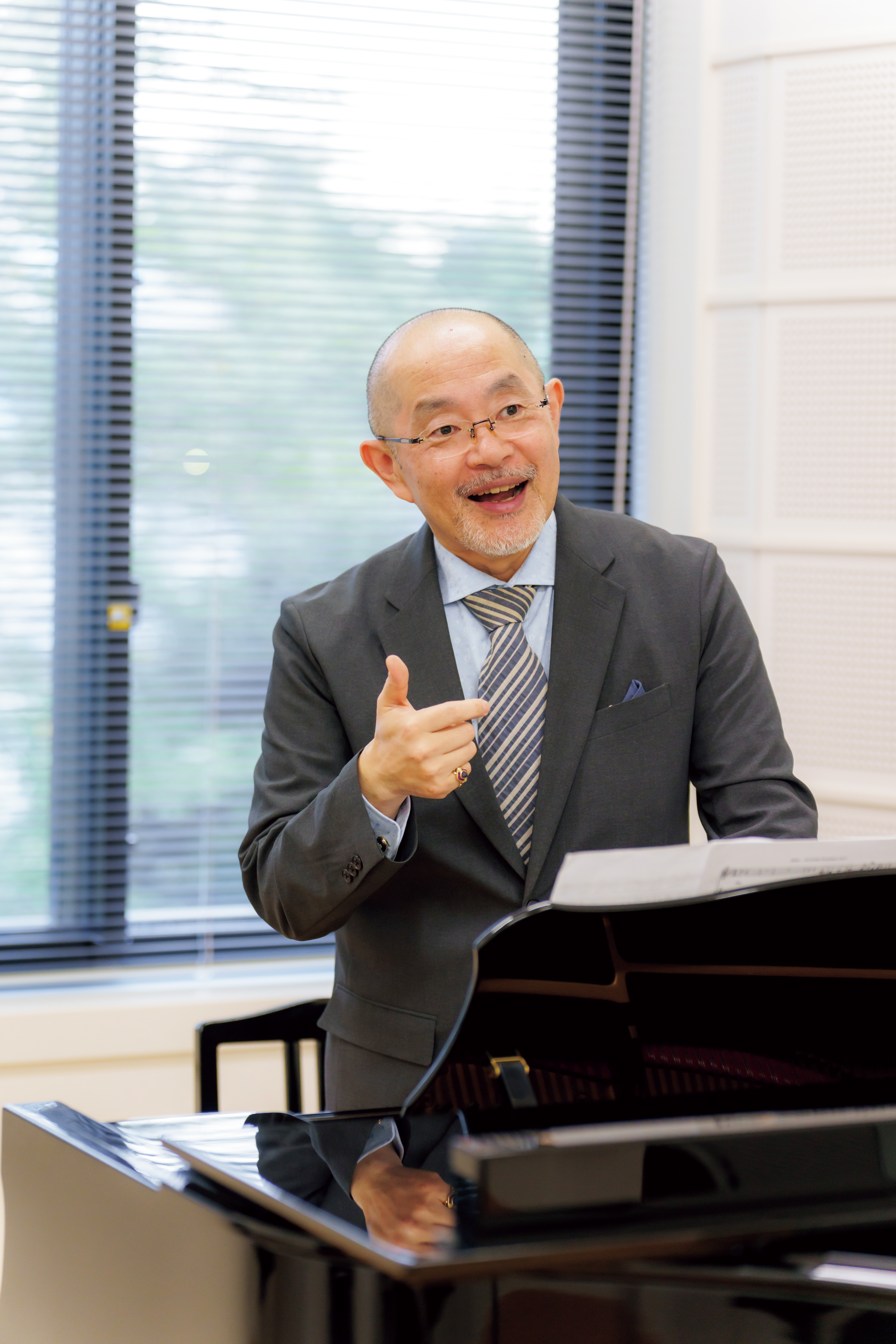
I want you to find your own unique treasure: your own voice.
KUBOTA Masumi
Vocal Music
Speciality: Voice
In vocal music, you yourself are the instrument. The "voice" that emerges from it is unique, a one-of-a-kind treasure. I want everyone to find that treasure, "your own voice," at Kunion. We all aim for the same goal, but the path to get there is infinitely different. In lessons, I want to find words that resonate with each individual's sensibilities, not overlook any changes, and celebrate their growth together. Let's worry together. Let's think together. And let's walk together!
<Story>
I was born into a family of musicians, so my encounter with music may have been even before I was born. When I step onto the stage, many staff members are with me behind me. The time I spend creating the stage with those staff members, and the moment when the stage comes to life, is my greatest joy. The world of music is a world where the powers of many different people come together.
Profile.
Kunitachi College of Music Graduated from the Department of Music Education. Received the Okamoto Prize. Performed in the graduation concert. Kunitachi College of Music Studied in Italy in 1994, and performed in concerts and operas in Italy, Switzerland, Austria, and the Czech Republic. Performed in concerts and operas in Italy, Switzerland, Austria, and the Czech Republic. After appearing in the opening performance of "Aida" at the New National Theatre, she has appeared in many operas. She has also appeared on numerous stages with the Fujiwara Opera Company. In recent years, she has appeared in the new Japanese operas "Mizuchi" and "Ningle," which focus on the theme of environmental destruction, and has played a part in raising questions about society. He is a member of Fujiwara Opera Company. She is a member of the Japan Opera Association. She won the third prize at the 62nd Japan Music Competition. She received the Gotoh Memorial Culture Award for Newcomers to Opera.
Lesson Video
F. Schubert: Du bist di Ruh (You are my rest)
G. Puccini: "La Bohème" - "Quando me'n vo" (When I walk through the city)
Educational Goals
This major aims to develop musicians with rich sensibility, creativity, and humanity by fully understanding that "singing" is the foundation of all music, carefully cultivating basic skills, honing musical expression, and on top of that, acquiring a wide range of musical knowledge and general culture.
Admissions Policy
We are looking for proactive individuals who aim to be active not only as opera and concert performers, but also in various musical scenes in education and society.
Curriculum Policy
In the basic course, students will "develop a voice for vocal music" with the aim of achieving a more natural and straightforward vocalization. As a required subject, students will acquire vocal expression in a wide range of languages through diction classes in German, Italian, and French. In the specialized course, students will develop a more advanced musicality while learning dialogue and cooperation through opera, song, and oratorio ensembles.
Diploma Policy
Students will acquire the vocal technique and expressive ability that are the foundation of music, and with the ability to cooperate with others that they have acquired through classes such as ensemble and chorus, they will be able to respond and play an active role not only in opera and concert performances but also in all aspects of society.