
Music Education
Faculty of Music, Department of Music Cultures & Education, Music Culture and Education Major, Music Education
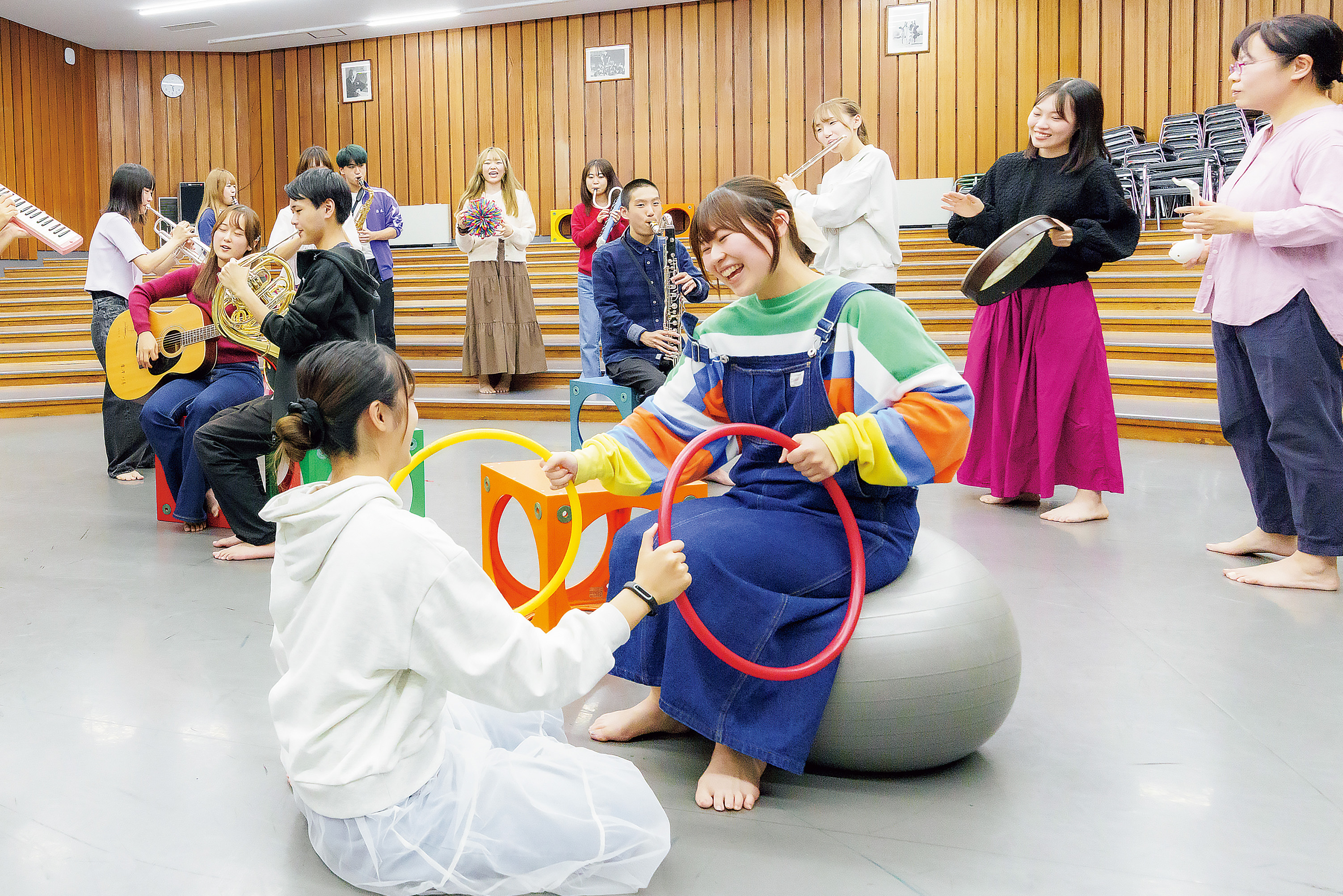
Aiming to be a music navigator
A music navigator is someone who can guide music communities such as local areas and schools. The curriculum is designed to equip students with the required high-level skills, broad knowledge, and solid teaching abilities. A key feature is the emphasis on proactive and collaborative learning; from the third year onward, students deepen their study and research on topics of interest. Furthermore, opportunities to deepen and broaden one's learning are available through music education courses or performance and composition courses.
Point
Special courses are held for students who wish to become teachers (open to all students regardless of major).
● Special Course for Teacher Training A (Target: 1st and 2nd year students): Trends in teacher recruitment exams, analysis of past questions, and testimonials from successful candidates.
● Special Course for Teacher Training B (Target: 3rd and 4th year students): Covers trends and past exam analysis of teacher recruitment exams, interview preparation, essay writing, group discussion, practical skills exam preparation, etc.
*You can take one practice exam in addition to the course.
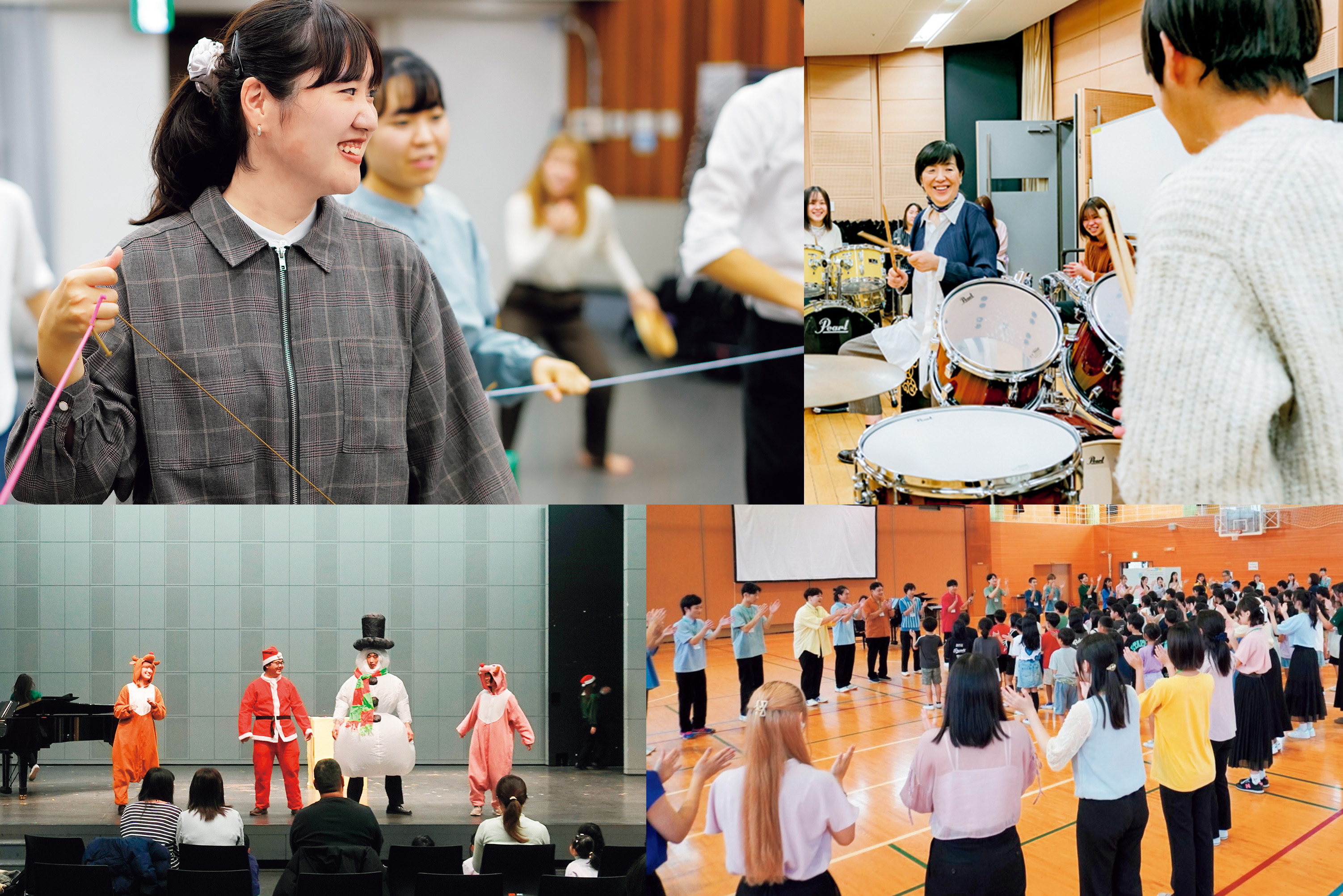
Class and Activity Introduction
Music Education Lectures
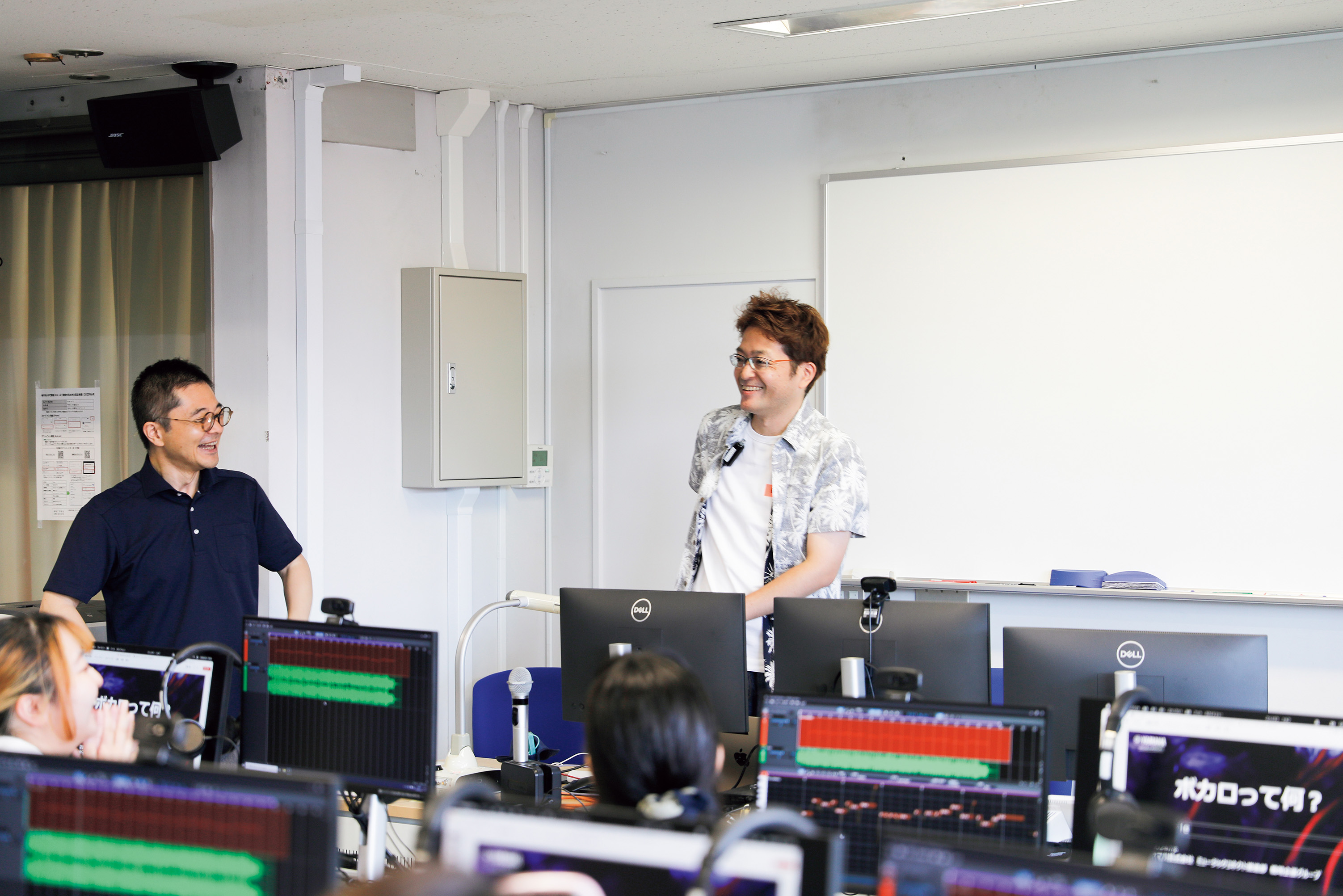
Students will learn about a wide range of topics related to music education, including the significance and history of music education, the use of ICT, the situation overseas, research into music education, and how to interact with people with physical and mental disabilities.
Music Education Practice (Improvisation Techniques)
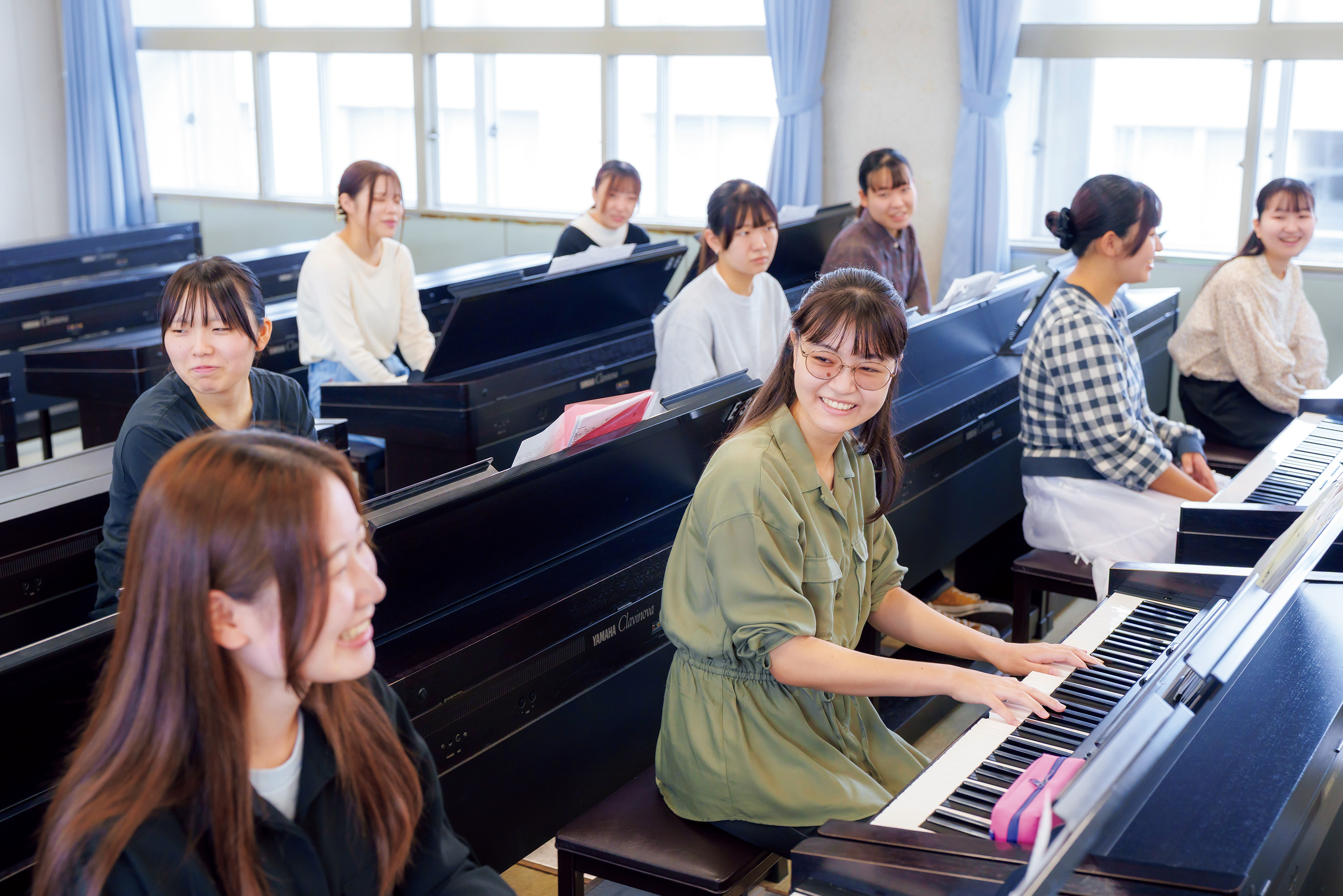
Students will create music by connecting familiar objects and the performances of others, expressing themselves through their music, and learning about the educational value, significance, and possibilities of improvisation.
MUSIC Space
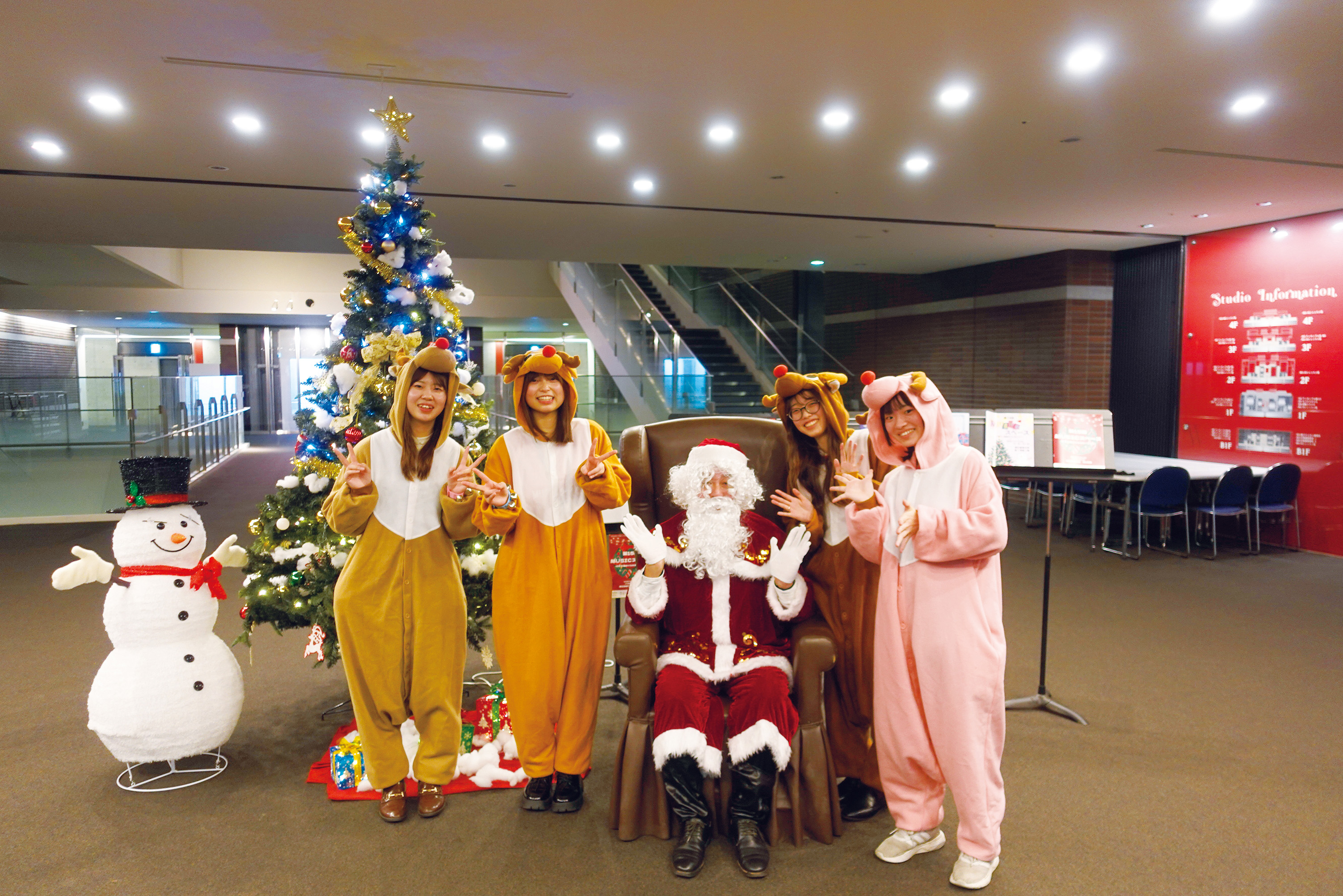
This event is planned and run primarily by students from Department of Music Cultures & Education. It began in 2011 with the desire to enrich living spaces with music. This December event features a variety of events, including choral singing, instrumental ensembles, eurhythmics, instrument experiences, instrument making, and a stamp rally, and students interact with visitors to create a musical space.
in Focus "Chorus Tour Rebirth ~towards next new generation~"
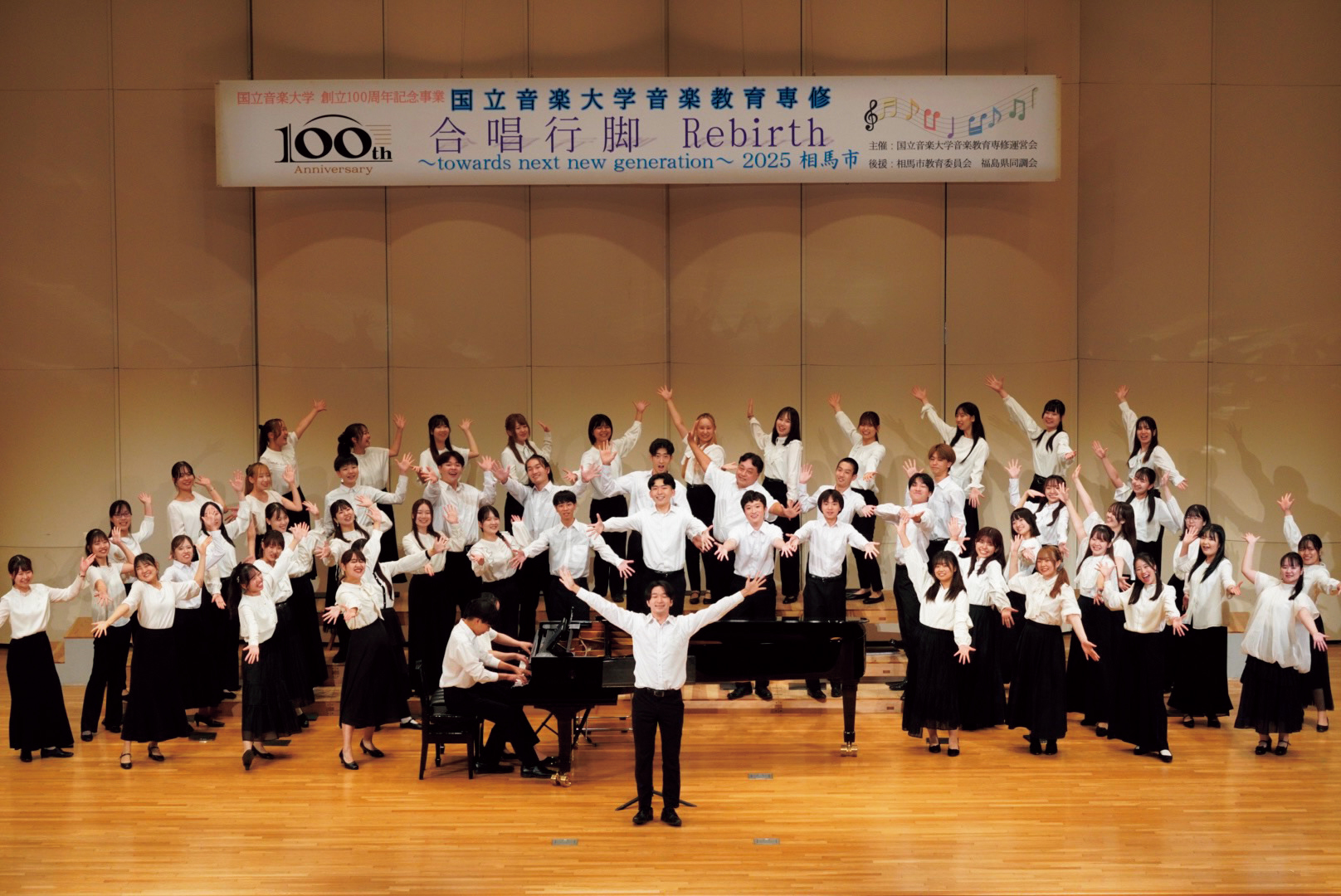
The Chorus Trip is an outreach activity led by the Department of Educational Music at that time during the Showa period to develop the ability of music teachers by visiting all over Japan. Music Education students visited elementary, junior high, and high schools in Soma City, Fukushima Prefecture, an area affected by the Great East Japan Earthquake, in September 2025 as part of the 100th anniversary commemoration project. They gave choral appreciation classes and choral competition instruction, culminating in a concert at a civic hall. In February 2026, a documentary film was screened and choral presentations were made at the university's Concert Hall Main Hall.
Student's Voice
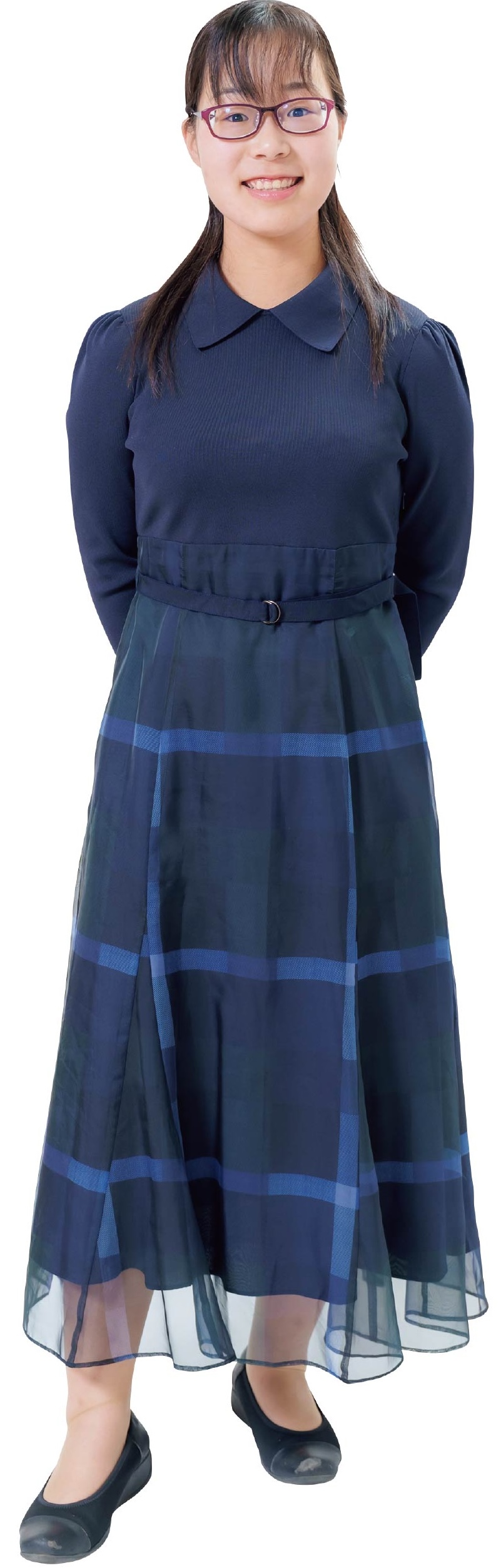
One of the unique features of a music conservatory is that you can study both practical subjects and lectures.
The children's smiles are a source of encouragement for me.
Hinako DOI
Department of Music Cultures & Education Music and Culture Education Major Music Education 4th year
Graduated from Kunitachi College of Music Kunitachi College of Music Senior High School in Tokyo.
Music Education + School Music Education Course
The distinguishing feature of Music Education is the balanced curriculum, which includes a wide range of practical subjects unique to a music university, such as recorder, percussion, vocal music, piano, choral singing, and eurhythmics, as well as lecture-based subjects such as music education and teacher training. Because the subjects are so diverse, there are often times when you feel intimidated, but I have gained confidence that I can overcome these challenges if I challenge myself without fear. There are many opportunities to sing in a chorus, such as the "Ontama" concert by volunteer choirs in each year group, and visits to special needs schools, kindergartens, and schools. Seeing the joy on the children's faces deepens my desire to become a teacher even more. Sharing many performance opportunities with classmates who are pursuing the same dream is an experience unique to Music Education.
Faculty Message
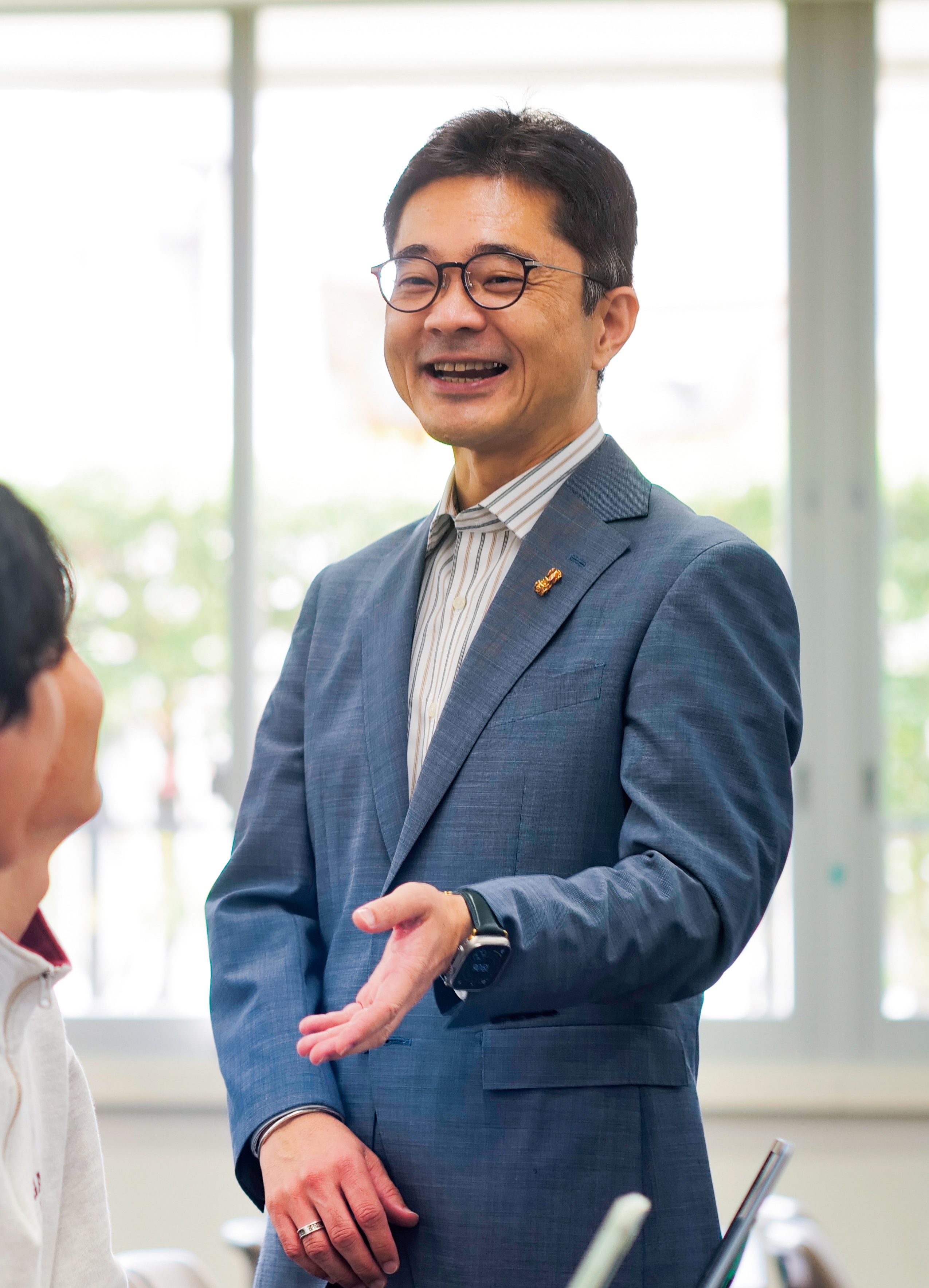
Music education is about connecting people with music.
Jun TAKIKAWA
Music Education
Specialty: Music Education
I believe that music education is not just about teaching music to people, but about "connecting people with music." In Music Education, you can learn various ways to connect people with music by using the latest ICT, engaging in physical activities, and visiting various facilities. Let's work together to consider how we can nurture each individual's love of music.
<Story>
My motivation as a music education scholar stems from the memories of the wonderful music (and musicians) I've encountered at various turning points in my life. The beauty of music as an art form, and the rigor of pursuing it, brings joy to life, overcoming hardships along the way. As someone involved in music education, I believe it is my mission to pass this on to future generations.
<Profile>
He spent his middle and high school years in Canada. He completed Doctoral Program at Tokyo University of the Arts. After serving as a lecturer at Ueno Gakuen University and an associate professor at Kumamoto University, he is currently a professor Kunitachi College of Music College of Music. His publications include "Menahem Pressler's Piano Lessons: Hints for Artistic Performance from a Music World Treasure" (single translation, Ongaku no Tomo Sha), "Handbook for ICT Utilization in Music Classes," "100 Ideas for Music x App x Classroom Activities," and "Individually Optimized Learning x Collaborative Learning Achieved Through ICT Utilization" (all published by Meiji Tosho).
Mock Lesson
Educational Goals
In this program, students will acquire high-level musical skills and a wide range of musical knowledge, and by engaging in a wide range of practical musical activities with their peers, they will develop the qualities and abilities to be active in a variety of fields, including as school music teachers, music classroom instructors, and music leaders in the local community.We will cultivate talented individuals with rich humanity and musicality who can creatively bring out and nurture the musicality of people in various aspects of society, and contribute to the inheritance and development of musical culture.
Admissions Policy
We are seeking people who are willing to contribute to music culture by proactively bringing out and nurturing the musicality of others in various settings and fields of society, including school music teachers, music classroom instructors, and music leaders in the local community.
Curriculum Policy
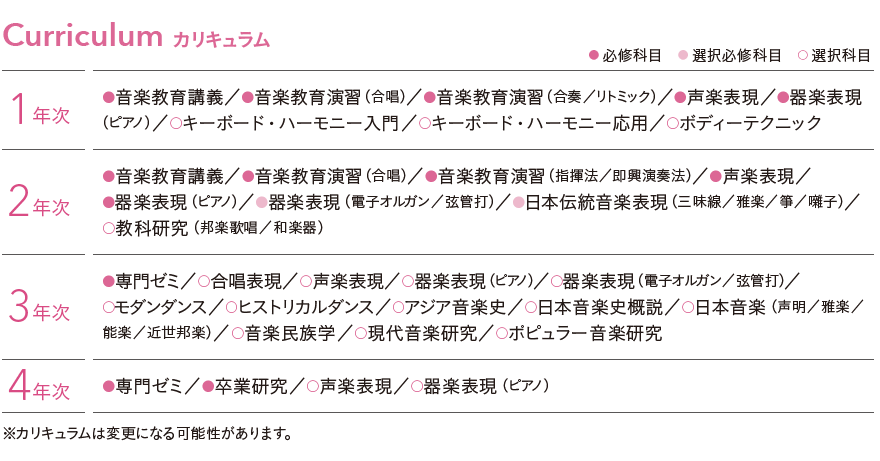
In the introductory course, students will learn piano, singing, eurhythmics, chorus, and various instruments to develop their musical talents, and will study Japanese music, ethnic music, popular music, and other genres to gain experience and mastery of a wide variety of music. Students will also learn through practice the techniques necessary for teaching music, such as how to work in a group or how to organize an ensemble. They will also acquire the ability to communicate in foreign languages and use ICT, which are necessary in modern society.
Building on the learning and experience gained in the basic course, the specialized course allows students to develop their individuality by choosing from a wide variety of lectures and seminars, and through the compulsory "Specialized Seminars I, II, III, and IV," which can be chosen from a wide range of content, students will acquire the skills, knowledge, and critical thinking necessary for music educators in modern society.
Diploma Policy
As a music educator, you will have a deep understanding of people and the ability to empathize, and you will have the creative planning and practical skills to navigate various music communities, such as local communities and schools, in order to pass on and develop music culture.
Specialized Leaflet

 Music Education Facebook Page