
Music Therapy
Faculty of Music, Department of Music Cultures & Education, Music Culture and Education Major, Music Therapy
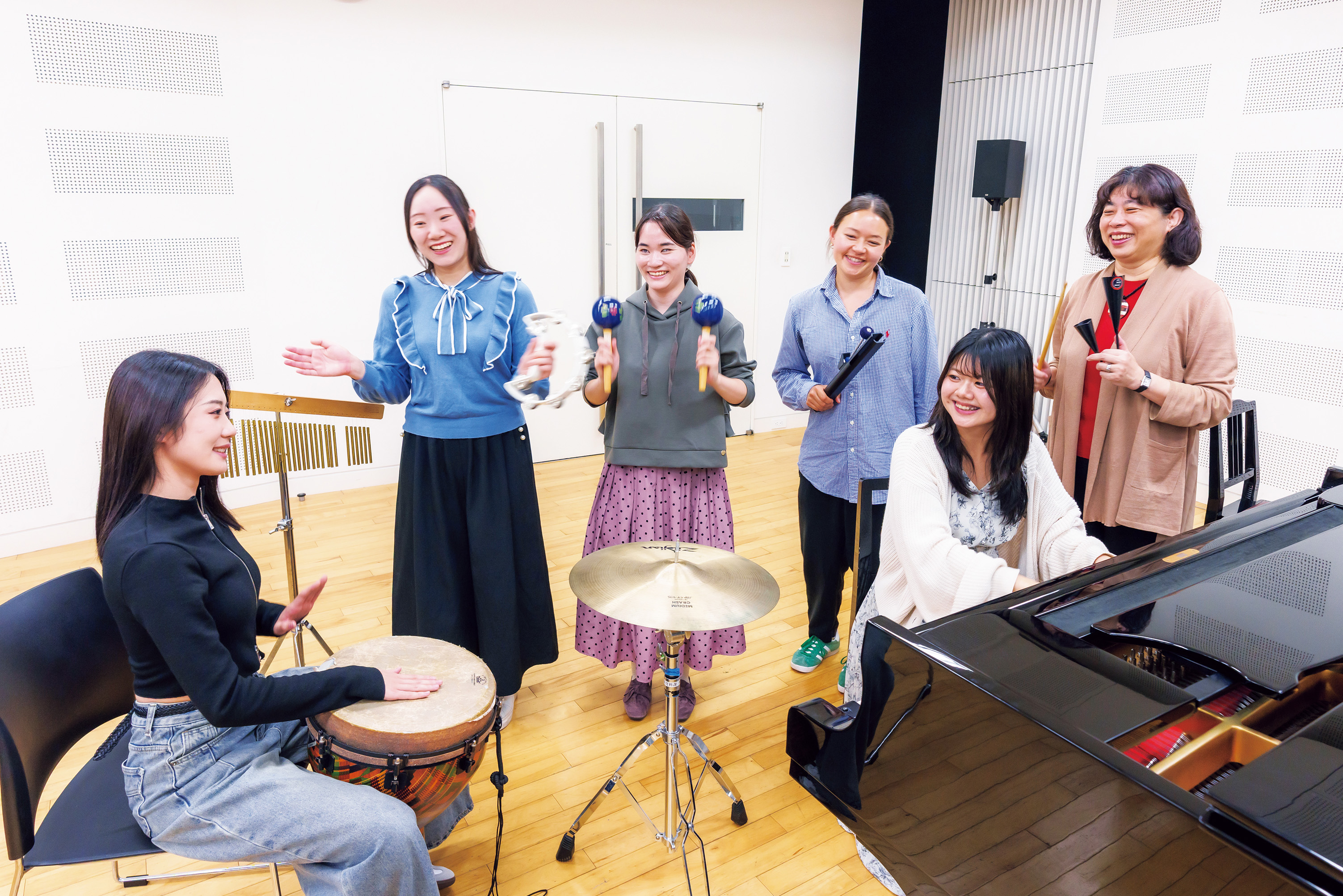
Harnessing the hidden power of music
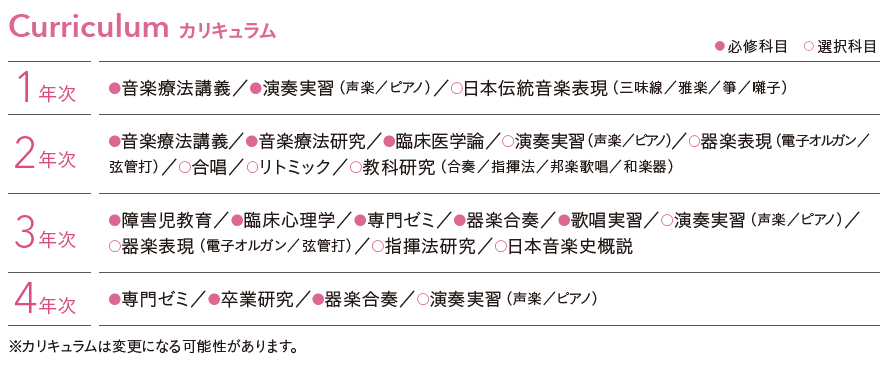
Music therapy, which involves communicating with clients through sound and music, is a very profound and broad field. We will learn theory and practice in a balanced way, acquiring the necessary skills and mindset. In the foundation course, you will gain a deep understanding of music itself and acquire fundamental knowledge of music therapy and related fields. In the specialized course, you will acquire practical skills that can be flexibly applied in fields such as medicine, welfare, education, and community.
Point
Aiming to obtain qualifications in Music Therapy Course
<Accredited school for the Japanese Society for Music Therapy Certified Music Therapist Qualification Examination>
Upon completion (or expected completion), you will be eligible to take the examination for "Certified Music Therapist by the Japanese Society for Music Therapy."
<Open to students regardless of their major or specialization>
◆ "Clinical Training"... All students will participate in practical training at facilities outside the university. They will gain practical experience by participating in the forefront of music therapy.
◆ "Clinical Research on Music Therapy"... Participants will bring back their experiences from their practical training sites and report on them, learning from each other about topics such as <the target audience>, <how music is used>, and <the role of music therapists>.
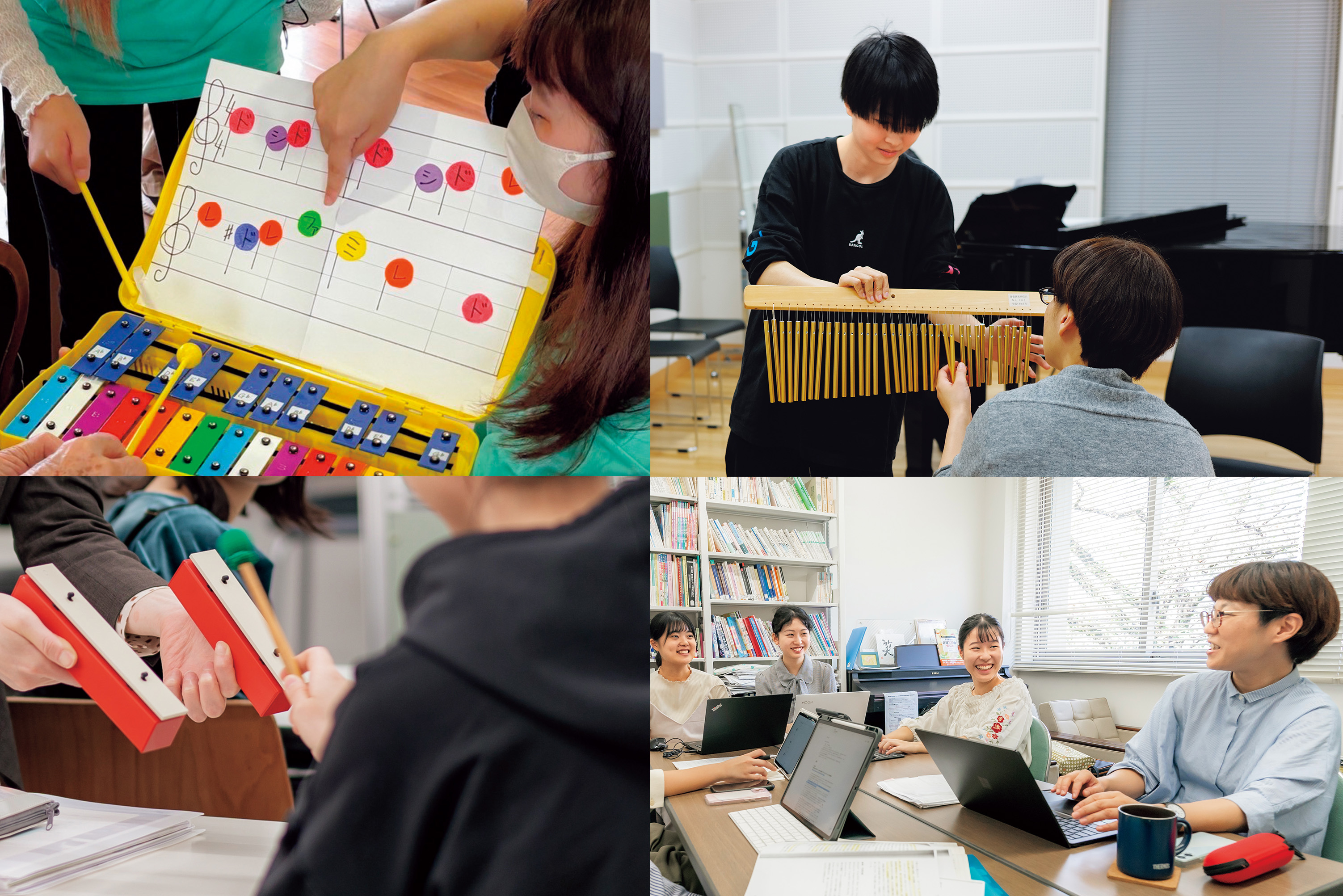
Class and Activity Introduction
Singing Practice
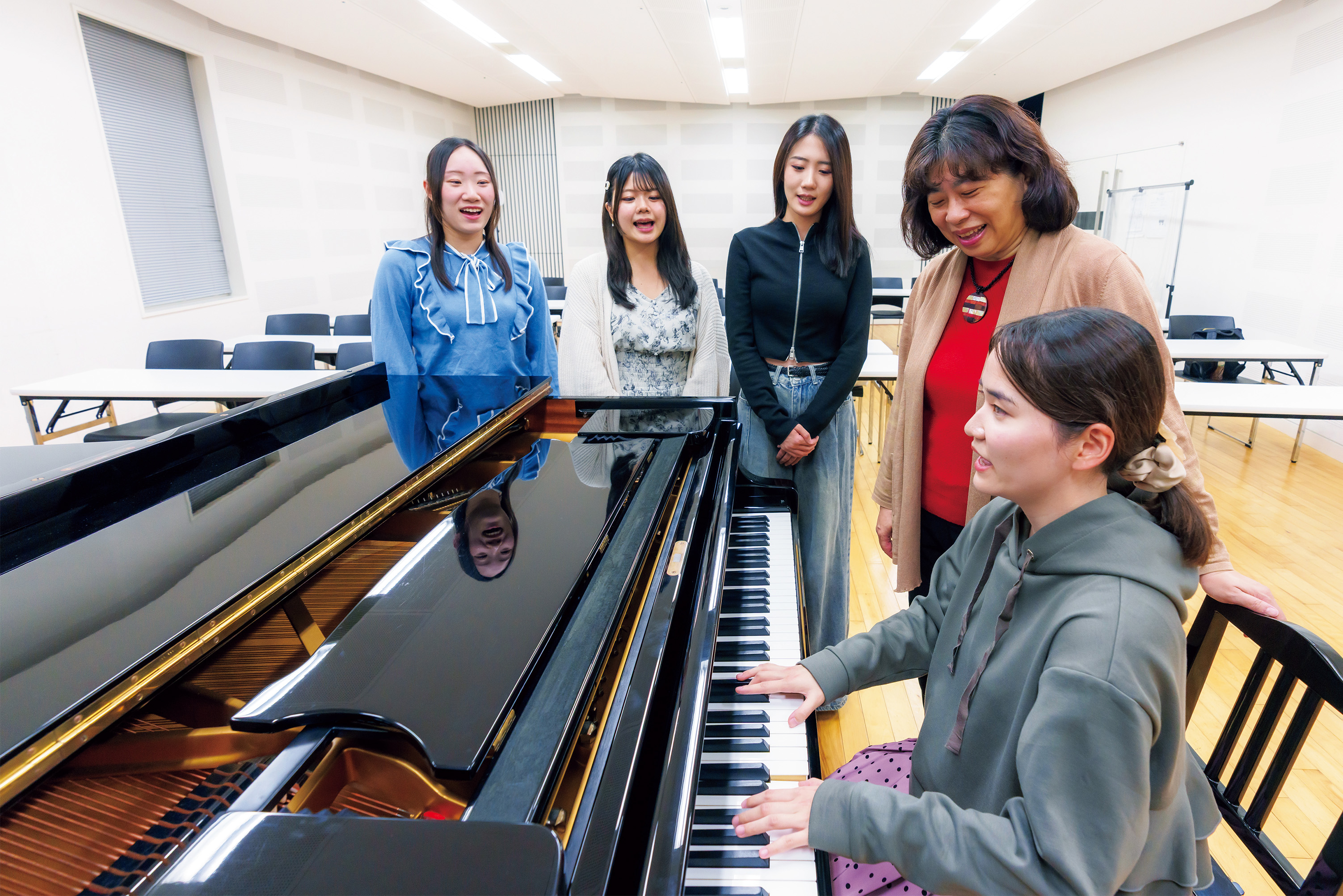
Students will learn the basics of singing and accompaniment, primarily on the piano, and acquire basic vocal and performance techniques suited to clinical situations.
Music Therapy Lecture
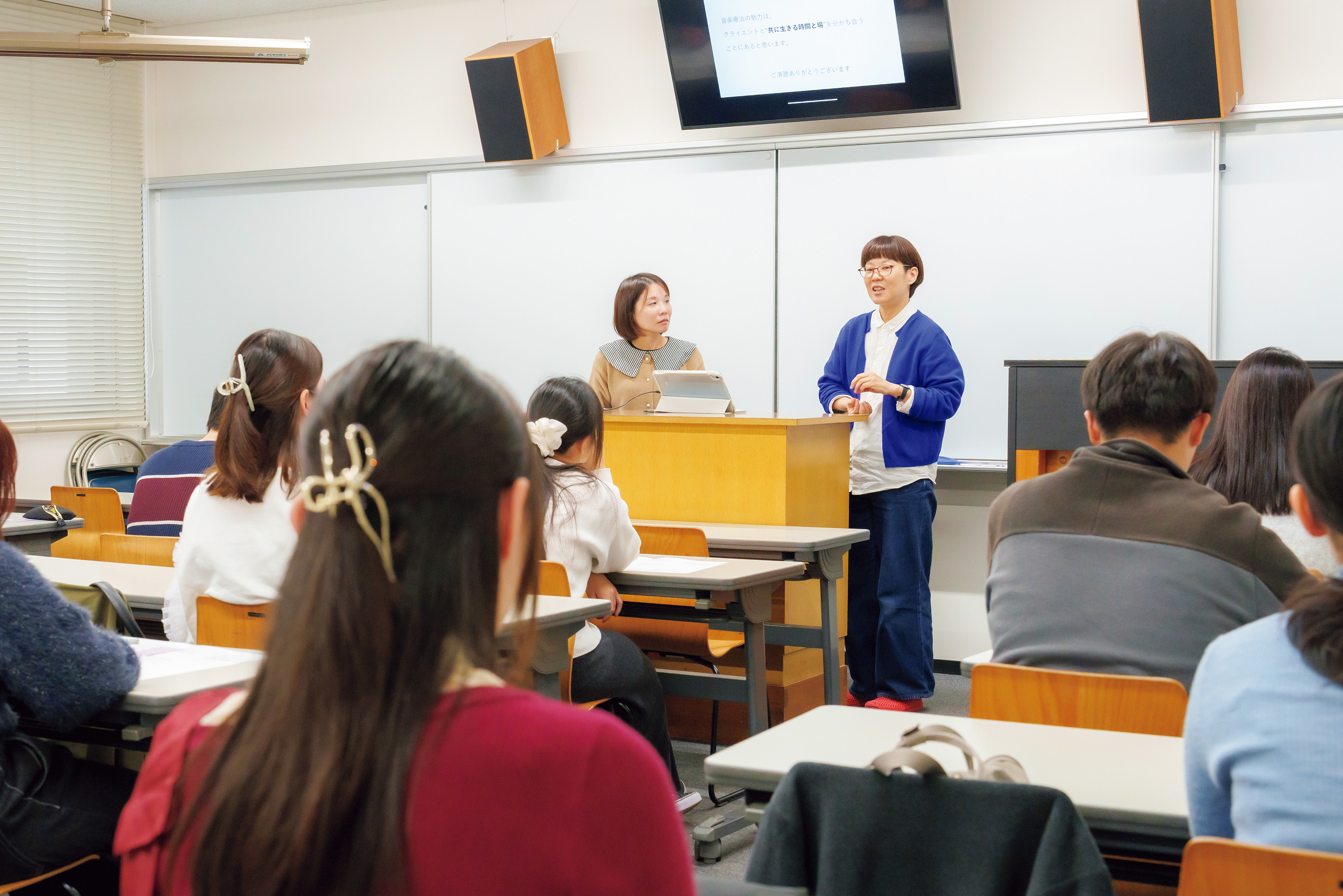
This course teaches the fundamentals of music-based support. It systematically covers everything from the basic concepts of music therapy to practical clinical applications and diverse areas of application.
Instrumental Ensemble
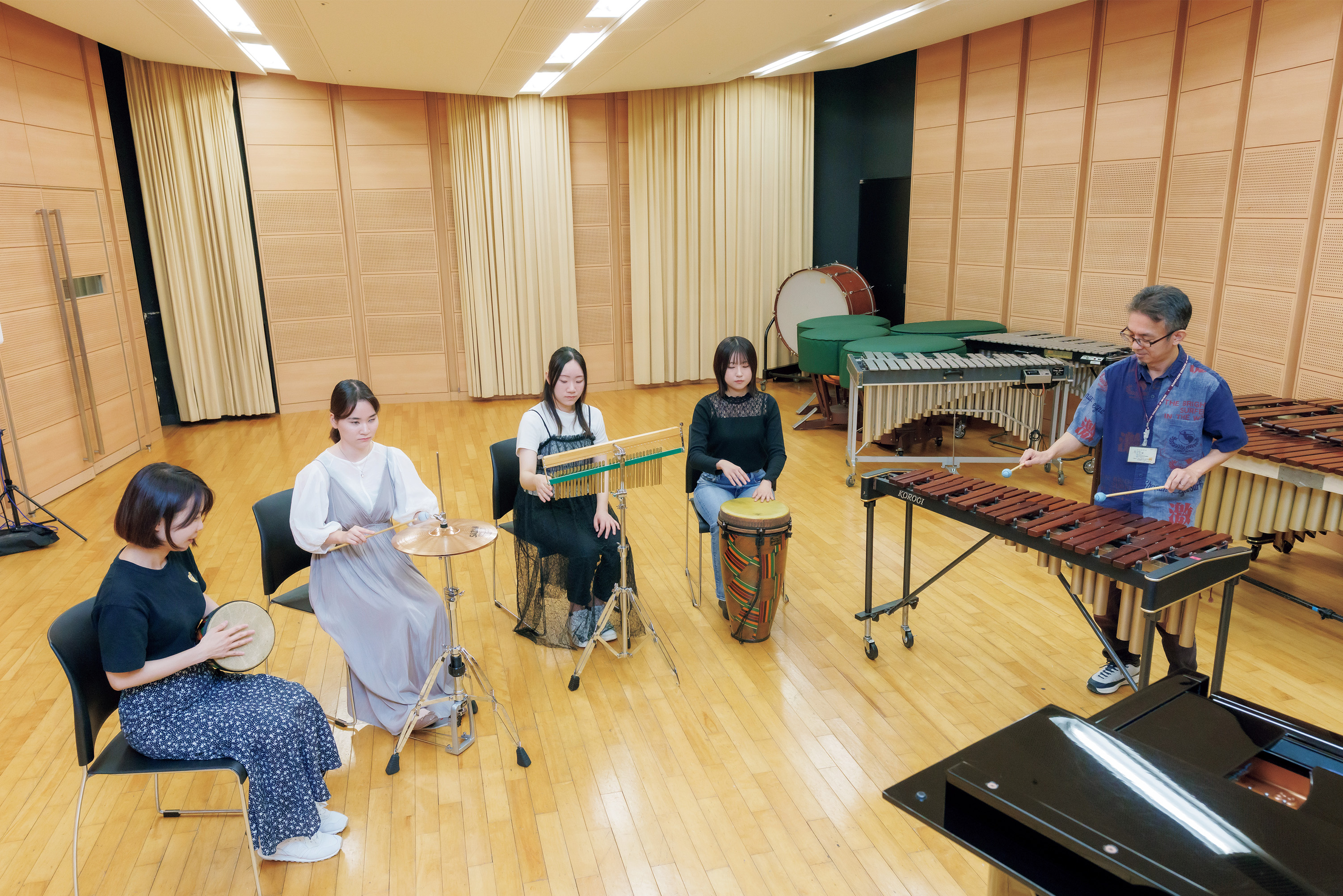
Through practice, students will learn about various techniques and their meanings that are useful for clinical activities using improvisation. The relationship between improvisation and physicality will also be discussed.
Student's Voice
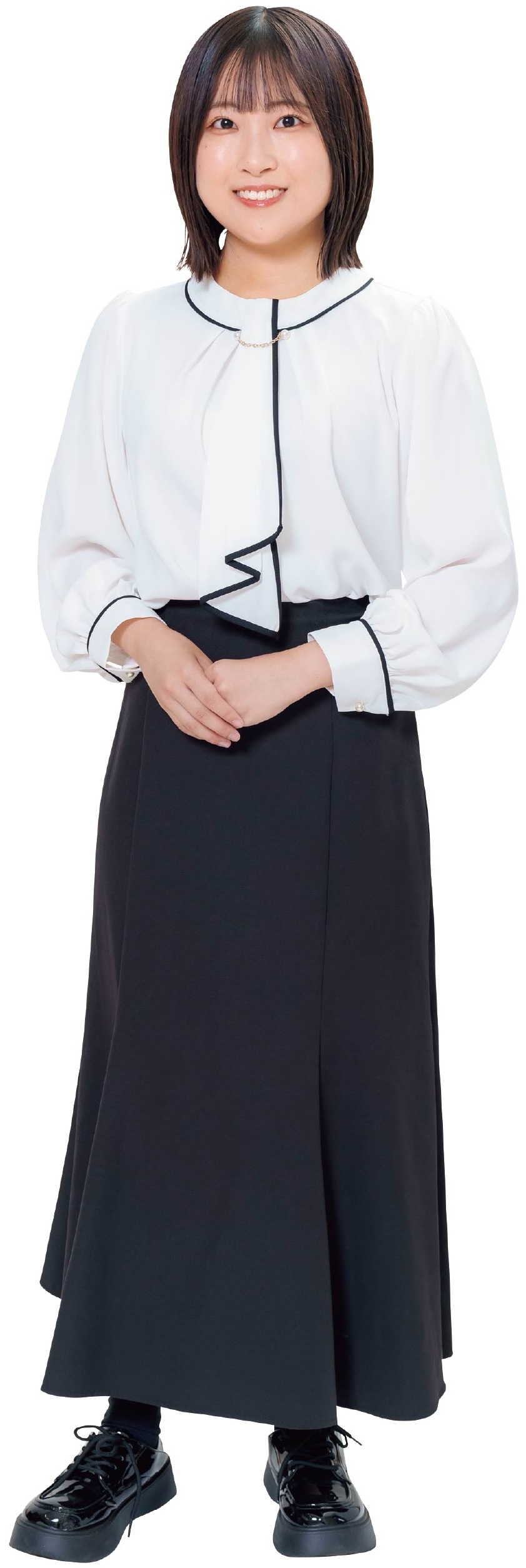
Suitable for a variety of target groups
You will acquire techniques and knowledge.
Shinobu KAWASAKI
Fourth year Music Therapy Department of Music Cultures & Education Music Culture Education
Graduated from Kureha High School, Toyama Prefecture.
Music Therapy + Music Therapy Course
Music Therapy has small class sizes, so the instructors provide meticulous support, and the students have strong connections with each other, learning and pushing each other to improve. "Singing Practice" is a class where we learn techniques and knowledge for singing while playing an instrument, simulating sessions with various clients. We acquire the skill to accompany in a way that makes it easy to sing, by changing the way we play chords and varying the tempo to suit the vocal range. When I observed a session conducted by a therapist in an actual music therapy setting, I was impressed by how they flexibly decided on the content and methods according to the client's condition on that day. I want to cherish my daily learning and continue to build up my knowledge and experience.
*Starting with the 2027 entrance examination, music theory and sight-singing (General A) will be removed from the examination subjects.
Additionally, vocal and instrumental (piano/electronic organ) performance will now be conducted within the interview process.
Faculty Message
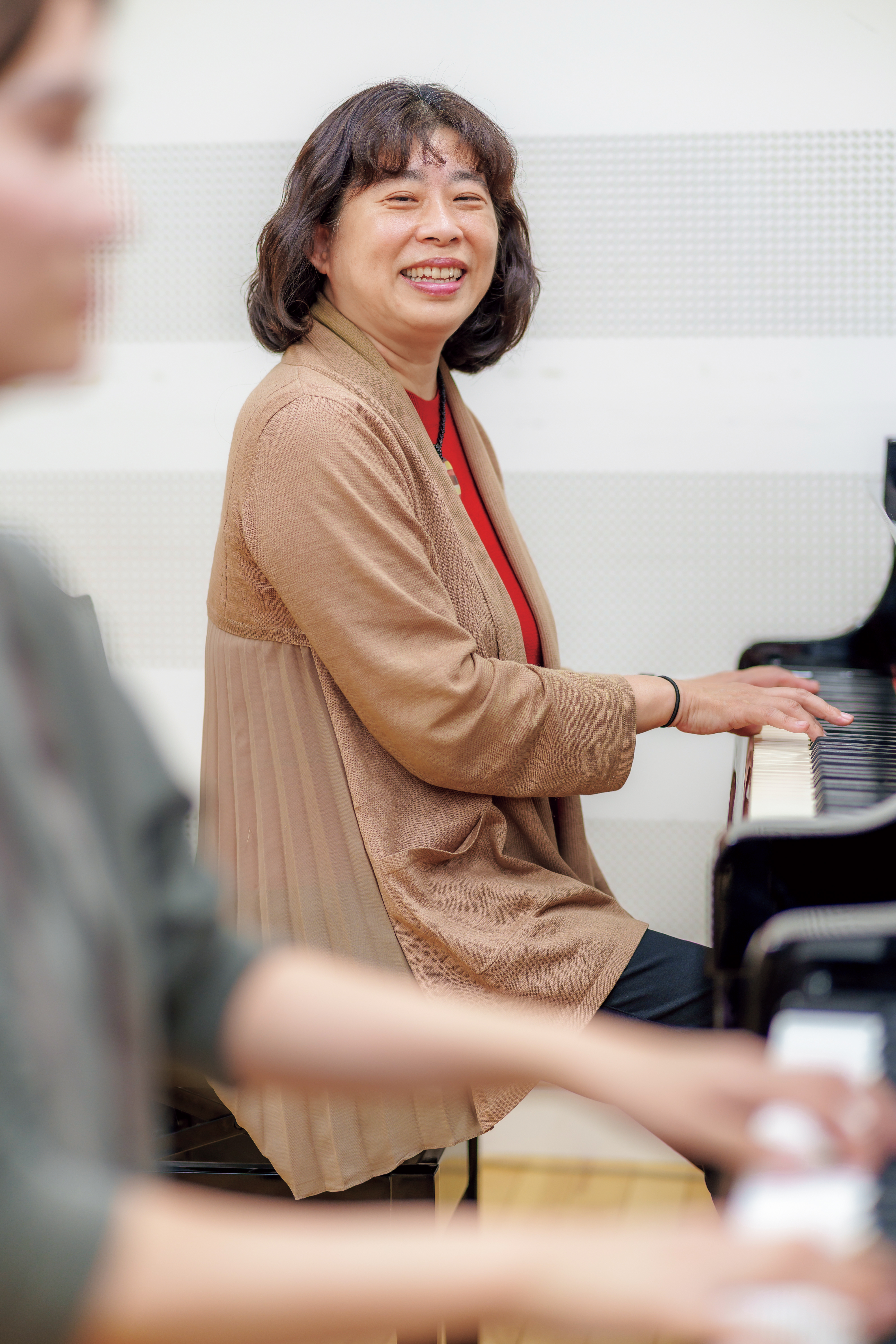
Let's explore the possibilities of music together
OKAZAKI Kana
Music Therapy
Specialty: Music therapy
Learning music therapy gives you an opportunity to think about the essential relationship between people and music. In my classes, we introduce the effects of music therapy in concrete terms while watching videos and audio recordings, and we develop practical skills in the field through exercises using musical instruments. We also offer a wide range of off-campus training at hospitals and facilities. Why not make the most of your music and join us in exploring the "potential of music" in medical, welfare, and educational settings?
<Story>
I was a truant child. I had been taking piano lessons for a long time, and when I was struggling to decide whether to become a psychologist or a piano teacher, I came across the profession of "music therapist," and I have been practicing it ever since. Regardless of whether or not someone has a disability or illness, the moments when we can smile together and communicate through music are what motivates me to live.
<Profile>
Doctor of Arts (New York University). Moved to the UK at age 14 due to her father's job transfer. Graduated from the Royal Academy of Music with a degree in piano. Completed the training program at the Nordoff-Robbins Music Therapy Centre in London, and completed the Master's and Doctoral programs in Music Therapy at New York University. Licensed music therapist in the UK and the US. Certified music therapist by the Japanese Society for Music Therapy. Nordoff-Robbins music therapist. Board member and chair of the training and certification committee of the World Federation for Music Therapy. Board member of the Japanese Society for Clinical Music Therapy, officer of the Japanese Society for Music Therapy Research, and representative and training director of the Japan Nordoff-Robbins Music Therapy Training Program (Kichijoji, Tokyo).
Specialization
Educational Goals
In this program, students will learn the basic knowledge, theories, and methods of music therapy based on a deep understanding of music and people and a global perspective, while also cultivating the clinical and musical skills that will allow them to act flexibly and appropriately in a variety of therapeutic situations, as well as the ability to apply these skills to various aspects of society. We also offer a course to obtain the qualification of "Music Therapist Certified by the Japanese Music Therapy Association," and we aim to develop talented people who are equipped with the knowledge, skills, and ethics of a more practical professional and who can play an active role in society.
Admissions Policy
In this program, students will learn the basic knowledge, theories, and methods of music therapy based on a deep understanding of music and people and a global perspective, while also cultivating the clinical and musical skills that will allow them to act flexibly and appropriately in a variety of therapeutic situations, as well as the ability to apply these skills to various aspects of society. We also offer a course to obtain the qualification of "Music Therapist Certified by the Japanese Music Therapy Association," and we aim to develop talented people who are equipped with the knowledge, skills, and ethics of a more practical professional and who can play an active role in society.
Curriculum Policy
The curriculum is designed to balance theory and practice, allowing students to actively learn while stimulating each other. In the foundation course, students focus on music itself, the foundation of clinical practice, while also acquiring fundamental knowledge of music therapy and related fields. In the specialized course, students not only learn more specialized music therapy theory and methods and clinical music techniques, but also deepen their understanding of various disabilities and illnesses, including those for children and adults with physical and mental disabilities, patients with mental and physical illnesses, and the elderly, and learn about treatment methods and their effectiveness. In addition, the Music Music Therapy Course license, involves clinical training at off-campus facilities for people with disabilities, medical institutions, and elderly care facilities, where students learn more practical skills and the ethics required of music therapists. Students from other departments and majors are also welcome to enroll in this course.
Diploma Policy
Based on a thorough understanding of people, diseases, and disabilities, students will recognize the diverse functions and influences of music and have acquired the ability to apply these knowledge flexibly and appropriately in a variety of settings, including medical care, welfare, education, and the local community.
Specialized Leaflet
