
Musicology and Music Informatics
Faculty of Music, Department of Music Cultures & Education, Music Culture and Education Major, Musicology and Music Informatics
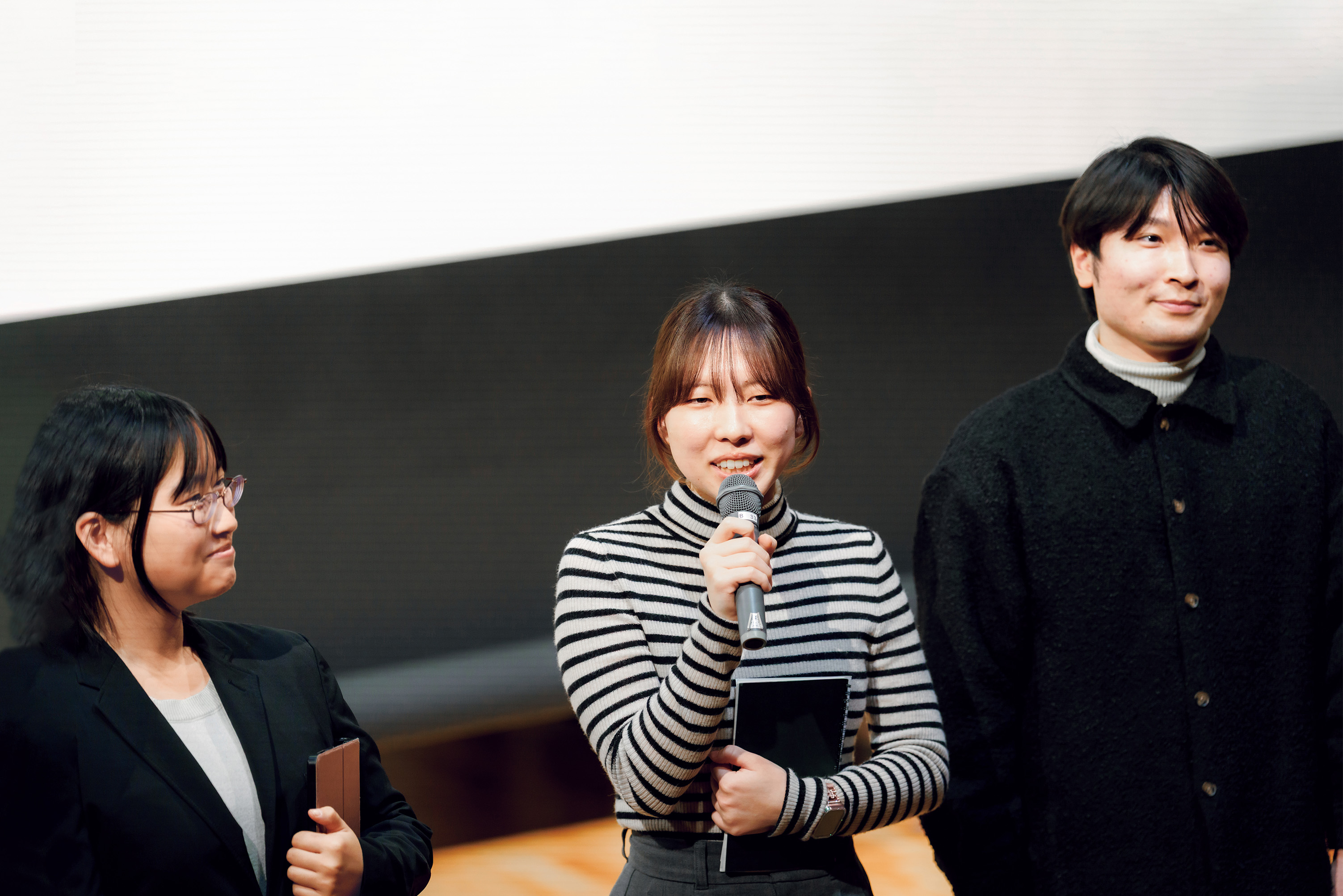
Collecting information, interpreting it, and disseminating it widely to society
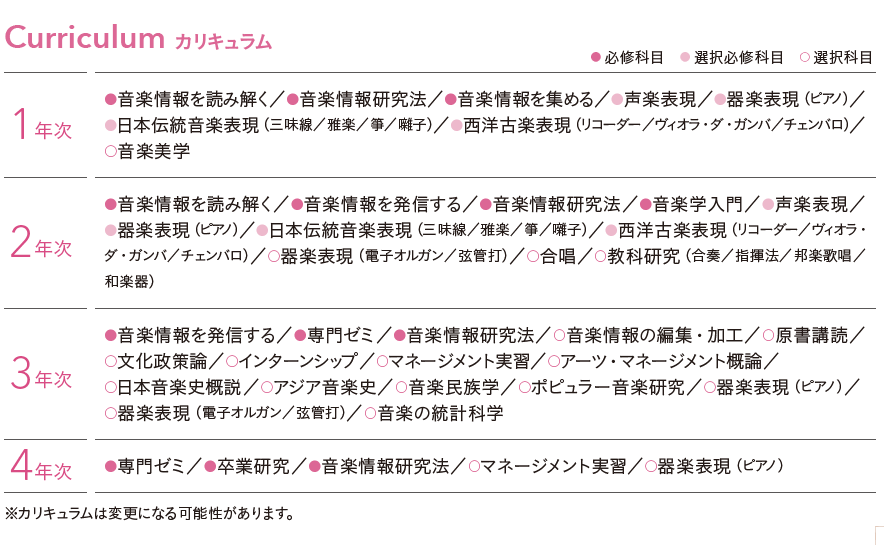
This program aims to teach students how to collect, analyze, and effectively disseminate information about music, with the goal of applying this knowledge to research and business. Until the second year, students will learn fundamental musical skills as well as the basics of information gathering, comprehension, and dissemination. From the third year onward, students will acquire practical and applied skills in diverse fields such as research, editing, management, and music data science. Based on our university's rich practical education and research foundation, we cultivate individuals with a broad perspective and flexibility who can effectively communicate music information to society.
Point
I feel safe because I have the support of my teachers.
Internship training
Company training programs, which are typically part of the job application process, can be taken as part of your coursework.
<Examples of actual training locations (recent examples)>
Zen-On Music Publishing Co., Ltd. / New National Theatre / Nippon Steel Kioi Hall / Tokorozawa Civic Culture Center Muse / Tempo Primo Co., Ltd. (music agency) / Shunpusha Co., Ltd. (academic publishing) / Sockets Co., Ltd. / Roland Corporation
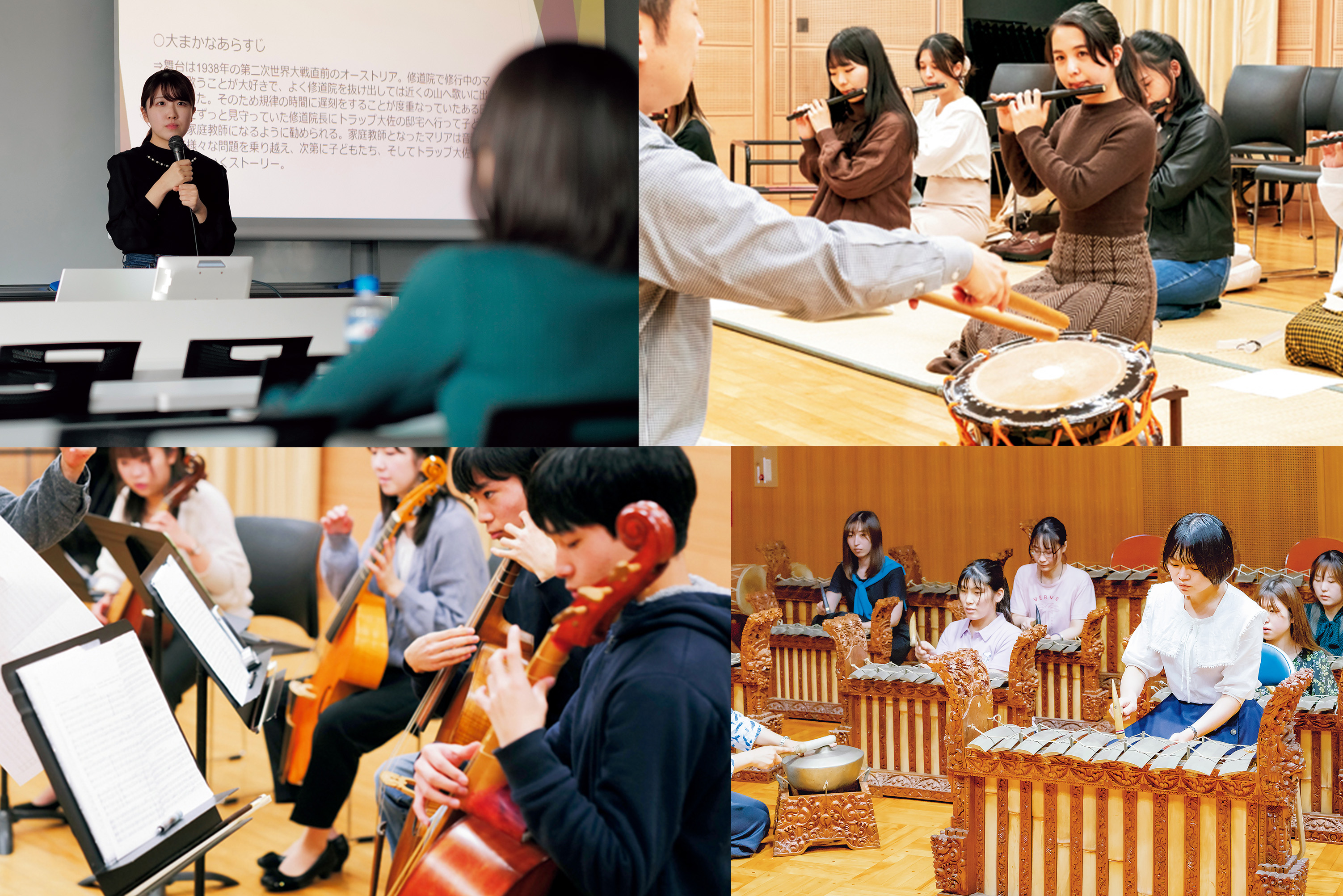
Class and Activity Introduction
Music information research methods

In addition to students presenting their graduation research, we invite leading figures in the music industry as guest lecturers to discuss how to connect musicology and music data science with society, and to explore career paths after graduation.
Disseminating music information

We publish a free paper every year to share research and findings on music. Everything from planning and content selection to interviews, writing, editing, and layout is handled entirely by students.
Music data science research seminar
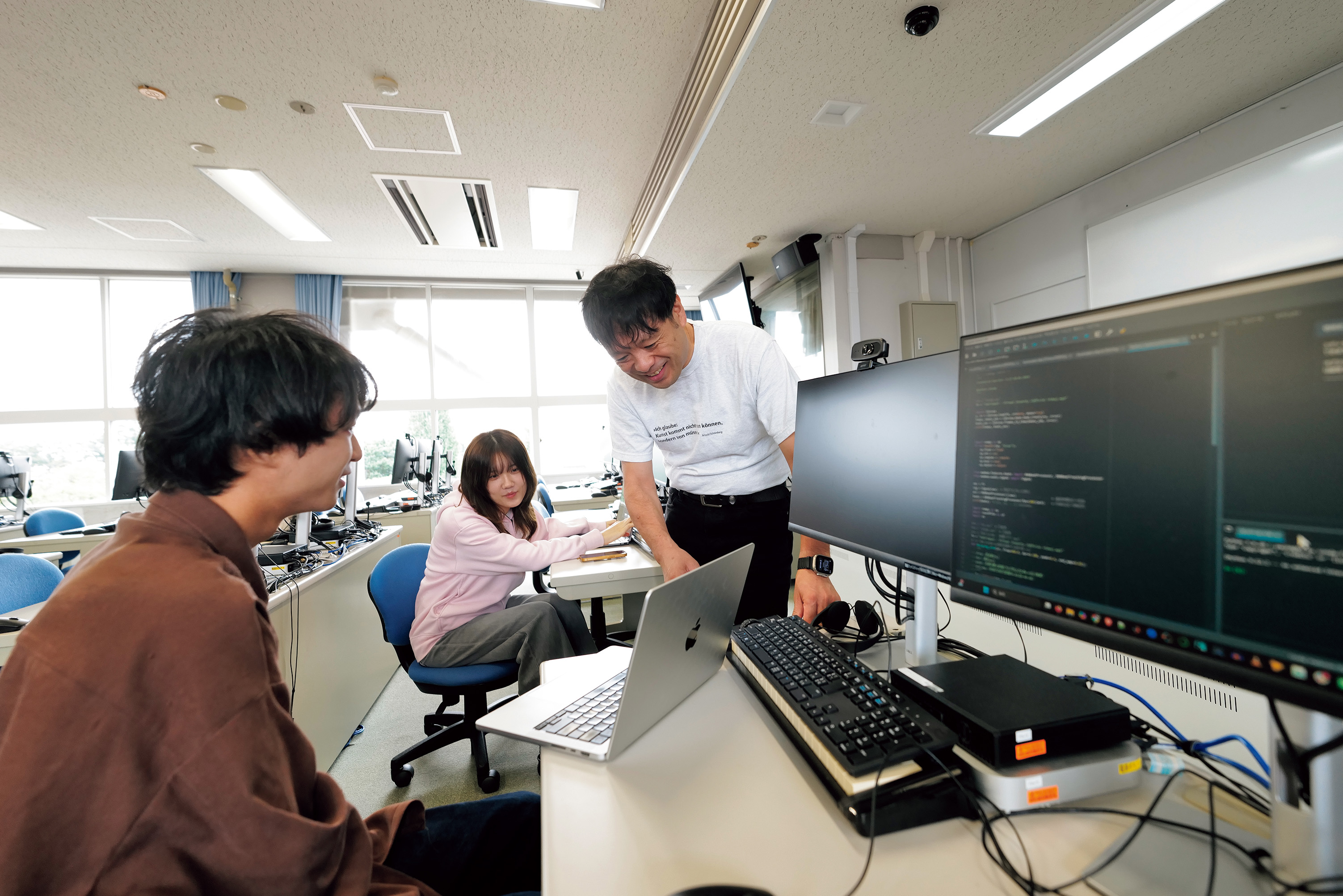
You will learn how to visualize acoustic signals using programming languages and analyze sound and music as data. Furthermore, you will acquire applied data science skills through the analysis and classification of music data using AI and machine learning.
In Focus - Specialized Seminar 1 & 2 (Research Presentation Session)
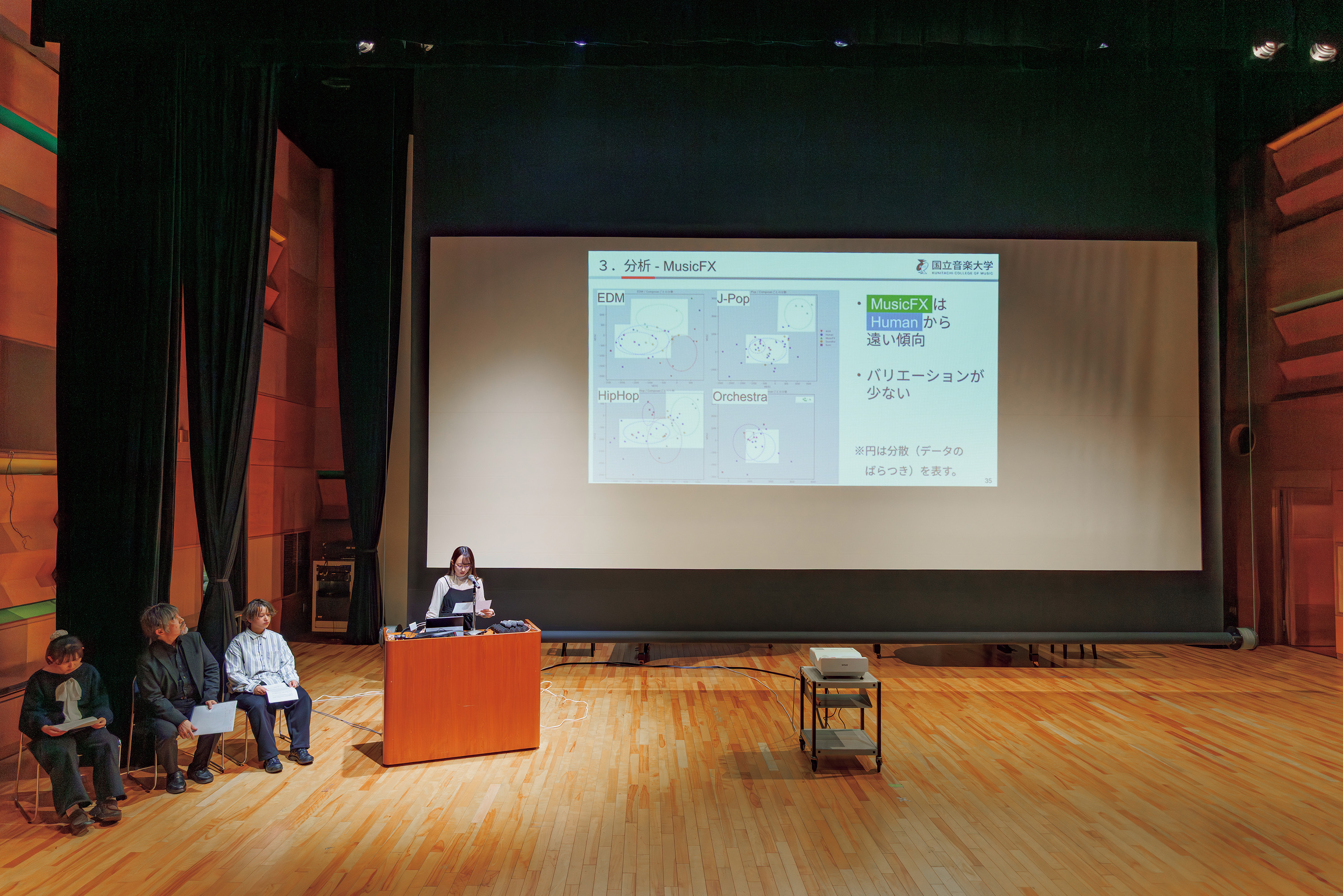
The annual seminar presentation, which will be held for the 41st time in 2025, is a tradition in which third-year students, among others, work in groups on a common theme and present their findings to the entire group. This year's theme was "Music and AI." We explored from various angles what kind of transformations new AI technologies and ideas will bring to the world of music.
Student's Voice

You can research anything related to music.
It's fun to see the possibilities expand.
Shiki WATANABE
Fourth year student Musicology and Music Informatics Department of Music Cultures & Education Music Culture Education
Graduated from Tokiwagi Gakuen High School in Miyagi Prefecture.
I chose Musicology and Music Informatics because I was attracted to the fact that I could pursue both academic studies and playing musical instruments. In the "Gathering Music Information" class, I learned how to gather information about music, how to write reports, and how to write references, and I actually researched and presented on topics that interested me. I was able to learn important skills through the process of researching, summarizing, and presenting. During the summer break of my third year, I did a five-day internship at a publishing company. I was able to learn about the specific tasks involved in book production, as well as hear valuable information about e-books and other topics. Because this major allows me to research any field related to music, it's fun to make new discoveries and expand my possibilities.
Faculty Message

Let's share the joy of doing creative work.
Fumiko SEO
Musicology and Music Informatics
Specialization: Music aesthetics, Christian music history
I want to share with you the joy of being in a world without limits, like music or academics, and the joy of doing creative work. I believe that what's important is to question everything, not jump to conclusions, to keep thinking persistently, to listen to different opinions, and to challenge yourself without fear of failure. I never forget that I myself am a learner, and my ideal is to think together with students and grow together.
<Story>
During my junior and senior high school years, I joined the school choir, one of the clubs, and dedicated myself to its activities. My experiences singing, conducting, and researching music there are the origins of my research activities. Although I was already familiar with the beauty of music back then, now that I'm studying it academically, I feel I can appreciate music on a much deeper level.
<Profile>
Graduated from the Department of Philosophy, Faculty of Letters, Kokugakuin University, and completed the Master's and Doctoral programs (Aesthetics and Art Studies) at the Graduate School of Humanities and Sociology, University of Tokyo (PhD: Literature). Author of the monograph "Faith and Music in Modern Civil Society: Is the Oratorio Sacred or Profane?" (Shunpusha, 2023), contributed to "My Academic Book 2: On the Publication of My Doctoral Dissertation" (Shunpusha, 2025), and most recently published the paper "The Role of Female Singers in German Civil Oratorios" (University Bulletin, 2025). Has a background in organ and choral music. Hobbies include mountain climbing, and commutes by road bike.
Specialization
Educational Goals
This program involves broadly exploring music-related information in society, critically examining the origins and structure of music, and the role of music in society, based on musicological methods, and learning how to disseminate the results to society. Through work in journalism, research, planning, production, and management, the program cultivates talented individuals who can play an active role in music-related fields not only in the music industry but also in a wide range of areas of society.
Admissions Policy
We are looking for people who have a curiosity and inquisitiveness about music and who wish to work in fields such as journalism, research, planning, production, and management through music-related information.
Curriculum Policy
In the basic course, students will acquire basic musical skills while also learning the basics of collecting, reading, and disseminating music information, as well as the basics of instruments and acoustics. In the specialized course, students will build on what they have learned in the basic course by acquiring practical and applied skills in a variety of areas, including practical learning in editing and management, work experience through internships, lectures and seminars on musicology, and instrument making.
In the third year, students will hold a joint research presentation, and in the fourth year, they will present the results of their individual research as graduation research (thesis, artwork, performance, etc.).
Diploma Policy
Acquire the ability to proactively collect information, examine, interpret, and process it appropriately, and then use it to benefit society.
Specialized Leaflet
